The "Book of Negroes" is the name of a register created by the British troops in 1783 during their evacuation from the port of New York at the close of the American Revolution. This register contains the names of nearly 3,000 people of African descent who evacuated from New York to Nova Scotia with the British. Pursuant to proclamations of freedom issued by the British commanders during the war, these Black people were granted liberty.
Scans of the original manuscript pages are available on the Nova Scotia Archives website, in the digital collection called African Nova Scotians in the Age of Slavery and Abolition. A plain text transcript of the register is available on the website Black Loyalists: Our History, Our People. Additionally, a searchable database of names from the register is available on the Library and Archives Canada website; the database is called Carleton Papers – Book of Negroes, 1783.
The register is organized by vessel. Each Black passenger was registered at the time of embarkation in New York. The vessel Ann, commanded by shipmaster John Clark, bound for St. John River, was inspected on November 19, 1783. The registry for this ship is on page 59 of the book. This vessel only had five Black passengers; one of them was from New Jersey, and his record has been transcribed here from the scan of the original register page. For the full registry for this vessel, consult the Book of Negroes transcript, database, or image scans in one of the aforementioned Canadian archives.
The abbreviation "GBC" in the transcript indicates that the person had in their possession a certificate of freedom issued by General Samuel Birch.
Bordentown refers to a historical community along the Delaware River in the northeastern section of Burlington County, New Jersey. It has its roots in a colonial-era settlement called Farnsworth's Landing that was established by English Quakers around 1682. In the early 18th century, this settlement became known as Borden's Town. At that time, the community was not yet a separate municipality and was considered part of Chesterfield township. For this reason, slavery-era documents for Bordentown may be filed under Chesterfield township.
In 1852, Bordentown broke off from Chesterfield to form a separate township. A portion of the neighboring Mansfield township was also given to Bordentown in 1852. Bordentown further splintered around 1877 when the urban center of the community broke off to form the separate City of Bordentown, while the surrounding area remained part of Bordentown township.
Today, Borno is a state in northeastern Nigeria. Historically, Bornu Empire stretched beyond this region and included parts of present-day Chad, Niger, Sudan, and Cameroon.
Boss was one of the victims of Jacob Van Wickle's slave trading ring in Middlesex County, New Jersey, in 1818. The legal documents related to the removal of Boss from the state of New Jersey to Louisiana suggest that he was born around 1799 and was aged 19 at the time of the events in 1818. However, Jacob Van Wickle falsified the age of some of his victims, making young children appear older than they really were and listing some children as adults in order to circumvent parental consent rules. For this reason, the birth year for Boss is questionable.
Bound Brook is a borough in Somerset County, NJ, located along the Raritan River. The community gets its name from the stream called Bound Brook, a tributary to the Raritan River. The community was first incorporated in 1869, from portions of Bridgewater Township. During the era of slavery in New Jersey, present-day Bound Brook borough was part of Bridgewater Township. For this reason, records related to slavery in this community may be found among Bridgewater Township records.
Bow Hill mansion, built by enslaver Barnt DeKlyn in 1790, is on the National Register of Historic Places. It is located in present-day Hamilton Township, Mercer County, near Trenton.
Bowdewine Decker was an enslaver who resided in Wantage, Sussex County, NJ. He was a prosperous farmer who owned over 400 acres of land. He had a store and a distillery on his property.
Bridgeton City is the county seat of Cumberland County and is located on the Cohansey River. English settlement in the area of modern-day Bridgeton dates back to the late 17th century, when this area was still part of Salem County. It was originally a small village known as Cohansey Bridge. This village became the seat of Cumberland County when Cumberland County broke off from Salem County in 1748. At this time, Cohansey Bridge, or simply The Bridge, was not yet incorporated as its own municipality. As the village grew into a town, The Bridge came to be known as Bridgetown by 1765, and the name evolved into Bridgeton by 1816.
Until the mid-19th century, the part of Bridgeton on the east side of the Cohansey River administratively belonged to Deerfield Township, and the part on the west side of the river belonged to Hopewell Township. In historical documents, residents of Bridgeton often indicated their place of residence by listing the name of the town, but their records (such as tax ratables) would be filed in Deerfield Township or Hopewell Township, depending on which side of the river their home was located on. Bridgeton Township was first incorporated in 1845 from a portion of Deerfield, and a short-lived township called Cohansey was created from a portion of Hopewell in 1848; by 1865, these two small townships merged to create modern Bridgeton City.
Bridgetown is the historical name of an area in present-day Rahway, New Jersey. It was originally a part of Woodbridge Township in Middlesex County. In the mid-19th century, this area was annexed to Rahway city and was transferred to Union County.
It is not to be confused with Bridgeton in Cumberland County, which was also known as Bridgetown in the past.
Bridgewater Township is located in Somerset County, NJ. The township was originally created by Royal charter in 1749 from a portion of Somerset County's Northern Precinct. The county seat, Somerville, and all of the surrounding communities located on the north shore of the Raritan River in Somerset County were originally part of Bridgewater. Several communities broke off from Bridgewater in the 19th century and formed separate municipalities, including Branchburg Township (1845), Somerville (1863), Raritan (1868), and Bound Brook (1869). A small portion of Bridgewater was taken in 1806 for Warren Township.
Sussex County Births of Enslaved Children microfilm contains a birth record for the son of Bet Dunkins, a boy named Brigs (or a different name that begins with Bri; the record is somewhat difficult to decipher).
The New Jersey Society for Promoting the Abolition of Slavery enumerated black people (free and enslaved) who lived in Northampton, Burlington County, around 1797. This person’s name appeared on the list. See the related Registration event for more information.
Brister is only listed by first name. He was a chimney sweep.
Bristol was an enslaved man born around 1774. He was married to an enslaved woman named Mary (b. 1782). Bristol and Mary were both manumitted by enslaver Erkuries Beatty (1759-1823) of West Windsor, NJ, on October 13, 1807. Bristol was aged 33 at the time of manumission.
Bristor was born in 1807, the child of Hanna (enslaved by Jacob Van Dike of Ten Mile Run, NJ). Under the provisions of New Jersey's Gradual Abolition Act of 1804, he was considered a slave for a term of 25 years and would become eligible for emancipation upon reaching that age.
Broffo Bowles was an enslaved man who lived in New Jersey in the early 19th century and was manumitted jointly by John Combs and Lewis Combs of South Amboy, NJ, on May 3, 1803. Broffo Bowles was aged 21 to 40 at the time of manumission.
Kings County is presently coterminous with Brooklyn, one of the five boroughs of New York City. It is located on the westernmost part of Long Island, across the river from the island of Manhattan. Early historical records mentioning places in Kings County often refer to the area as Long Island.
During the era of slavery in New York, Kings County encompassed many different towns and rural villages, such as Flatbush, New Utrecht, and Gravesend. Originally, only the area of Brooklyn Heights near the East River was called Brooklyn, but by the late 19th century, the growing City of Brooklyn annexed and subsumed all of the other municipalities in Kings County one by one. In 1898, the City of Brooklyn merged with Manhattan and the other boroughs to create the metropolis of Greater New York and giving shape to the municipal boundaries of present-day New York City.
Bucks County is a county in Pennsylvania, located north of Philadelphia and across the Delaware river from Trenton, New Jersey. It was founded in 1682 by William Penn. The county seat is Doylestown.
Bunn was born in 1806, the child of Lenah (enslaved by Samuel Longstreet of South Amboy, NJ). Under the provisions of New Jersey's Gradual Abolition Act of 1804, he was considered a slave for a term of 25 years and would become eligible for emancipation upon reaching that age.
Burlington is a city on the banks of the Delaware River in Burlington County, New Jersey. It was first incorporated in 1693 and was originally the county seat of Burlington County until 1796 (when the county seat moved to Mount Holly). Additionally, during the colonial era, Burlington served as the provincial capital of New Jersey, together with Perth Amboy (the provincial legislature and courts rotated between the two cities). Following the American Revolution, Trenton became the state capital in 1790.
The City of Burlington is surrounded by the municipality of Burlington Township. The city was originally part of the township, but they are now considered separate municipalities.
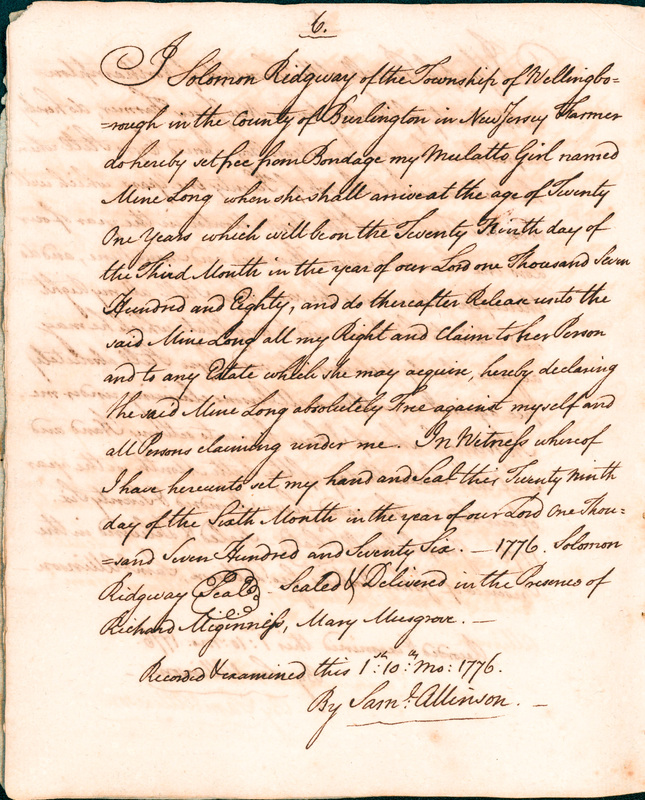
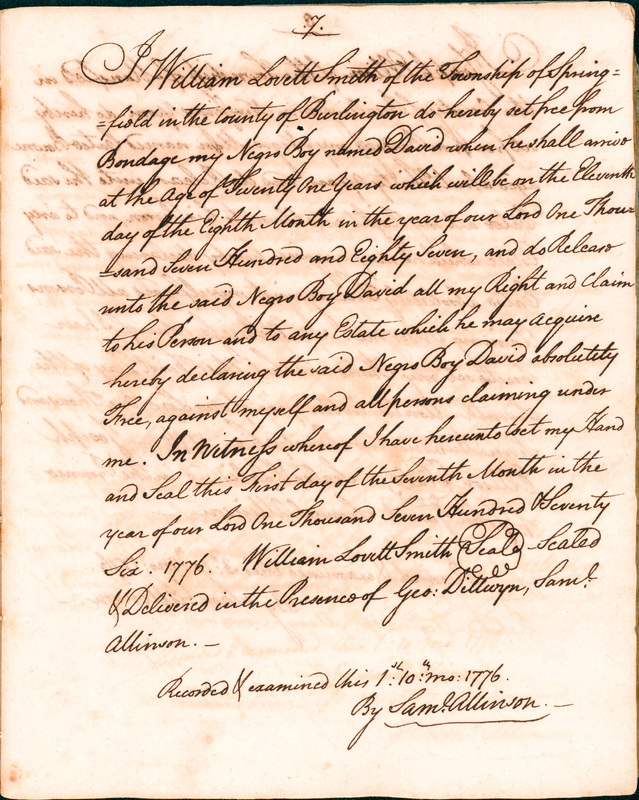
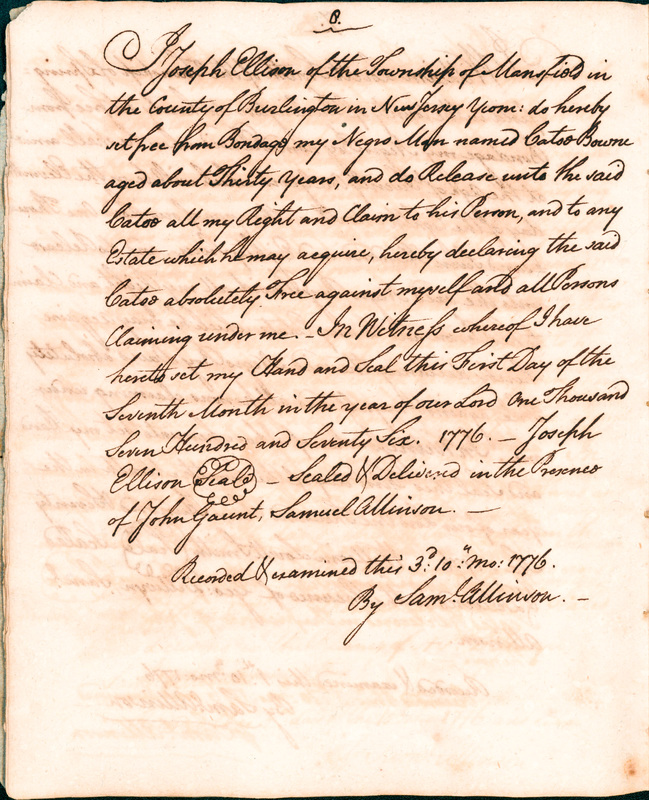
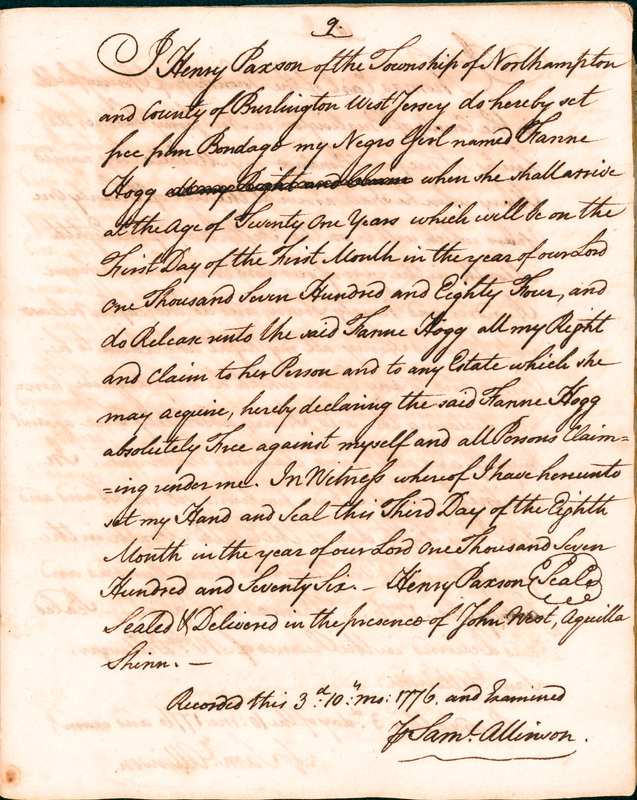
Burlington County is located in South Jersey and is the largest county in the state. It was one of the earliest counties established during the colonial era, and it was originally the seat of government for the Province of West New Jersey in the 17th century. Originally, the county seat was Burlington, but it moved to Mount Holly in 1796.
When it was created in the late 17th century, Burlington County was much larger than it is today and included the area that would later become Hunterdon County. This period was brief, and Hunterdon County separated in 1714. Later, in 1838, a portion of Burlington County south of Trenton was taken to form part of the new Mercer County, and in 1891, the area of Little Egg Harbor was taken from Burlington and moved to Ocean County.
County demographics from the 1800 U.S. census, when slavery in New Jersey reached its peak:
In 1800, Burlington was the 3rd most populous county in the state with a total population of 21,521. It ranked number 1 for the number of free Black residents, numbering 770, and representing 80.4% of the county's Black population. About 1 in 5 Black residents of Burlington were still living in slavery, and there were 188 enslaved residents counted (representing 19.6% of the Black population). The total Black population of Burlington was 958. In terms of total population percentages: 4.5% of the county residents were Black, enslaved people made up 0.9% of the total population, and free Black people made up 3.6% of the total population of the county.
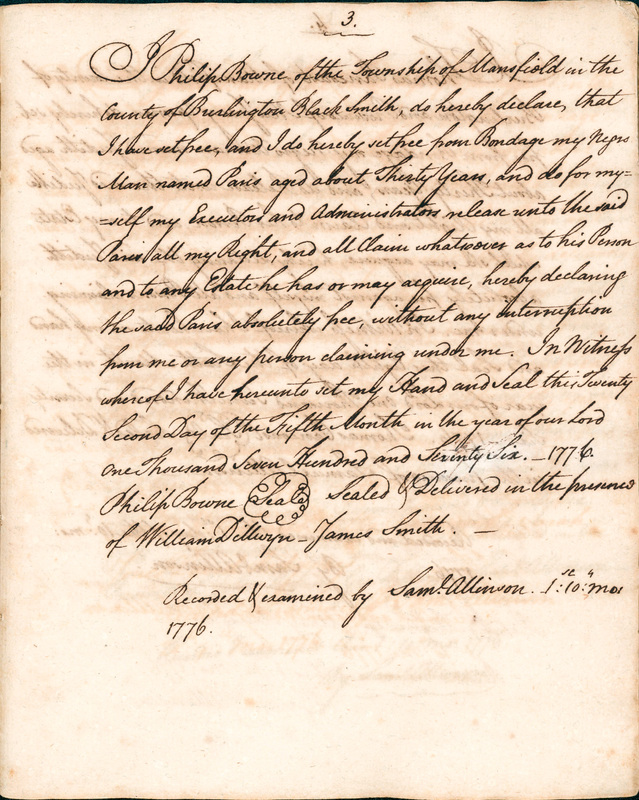
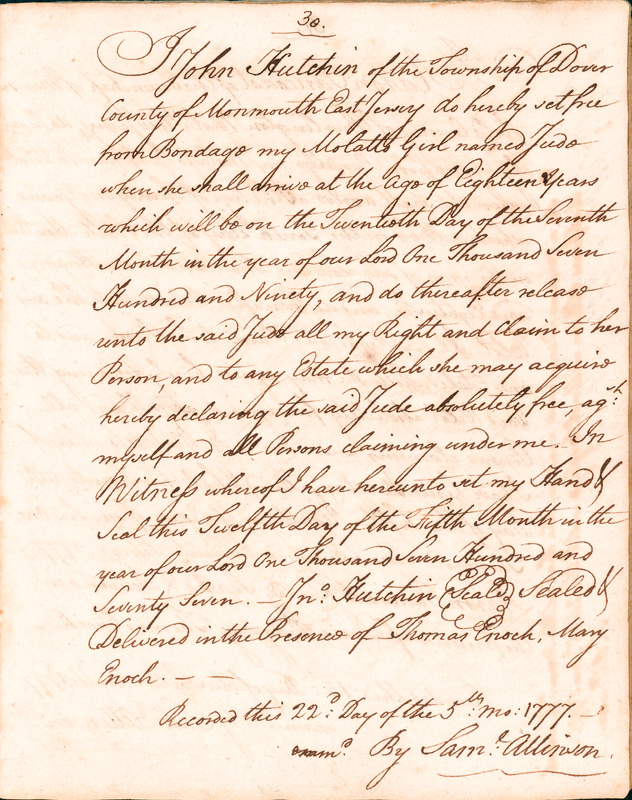
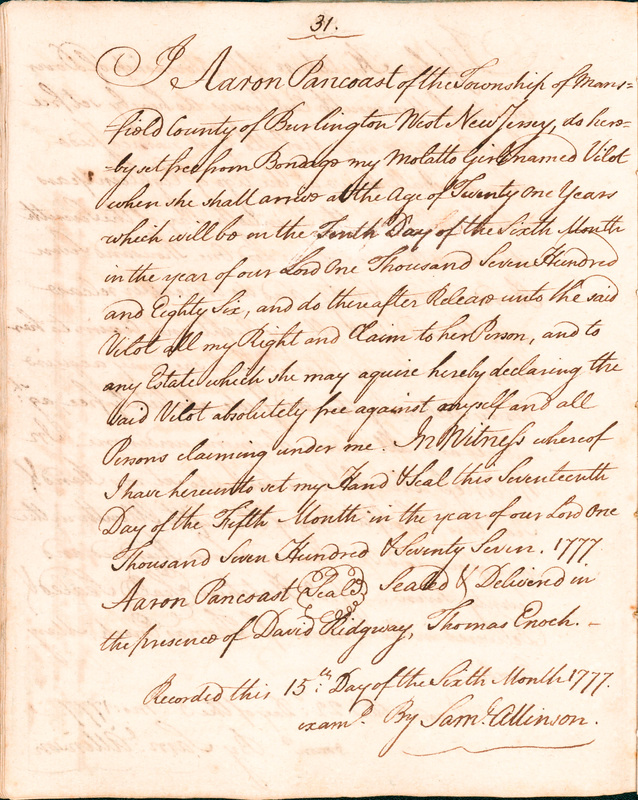
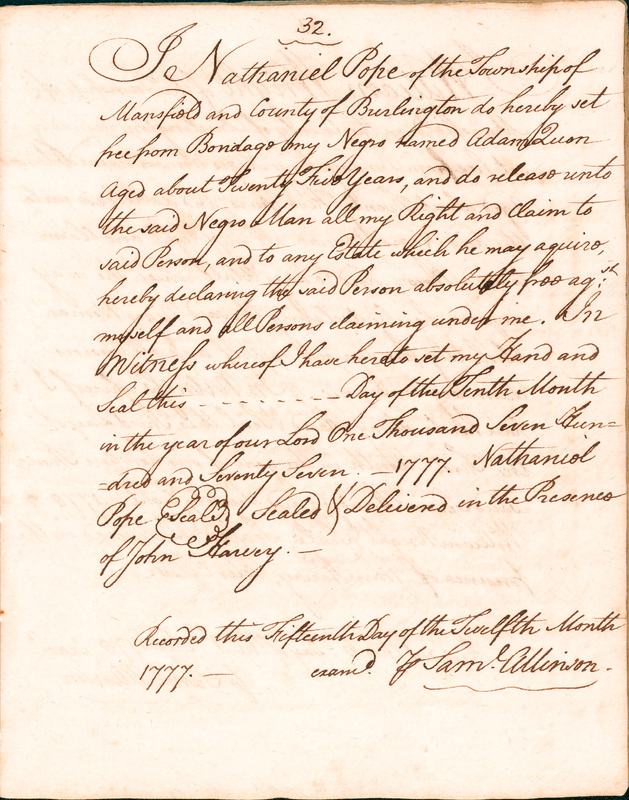
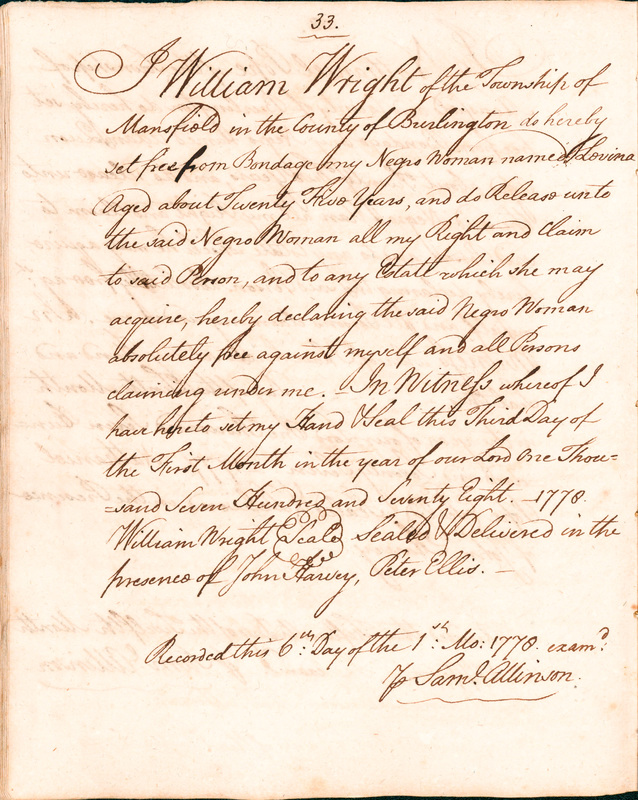
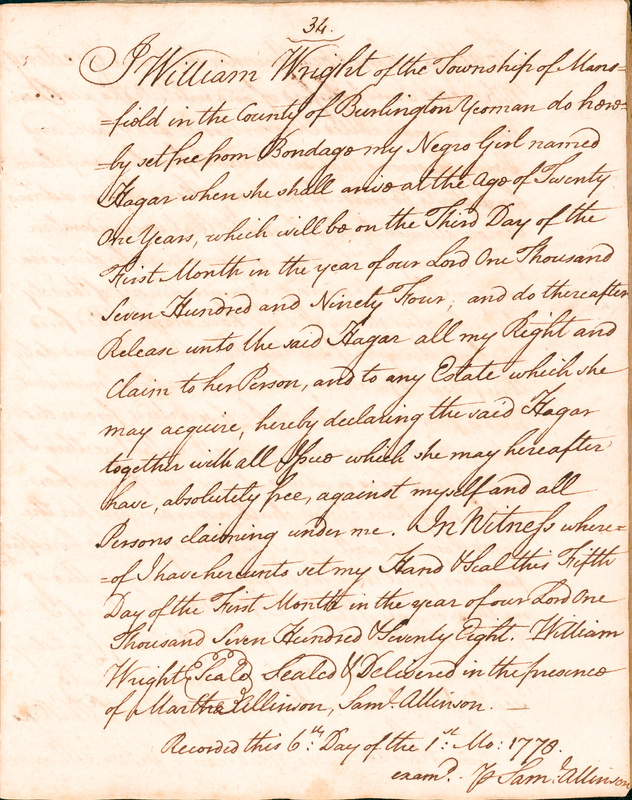
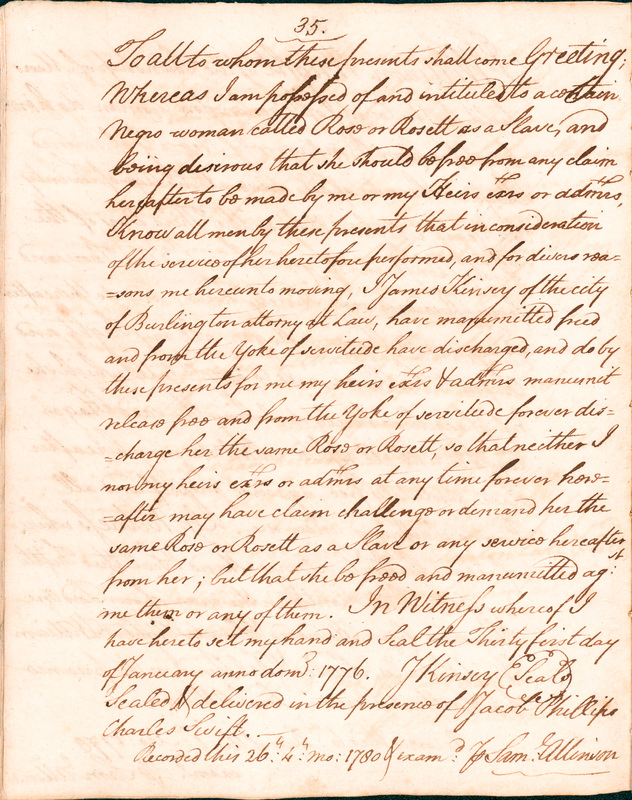
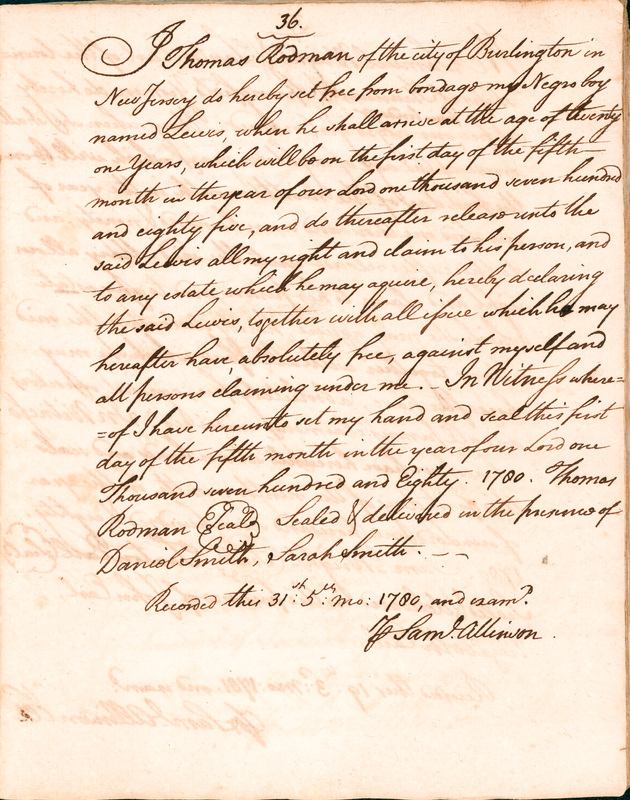
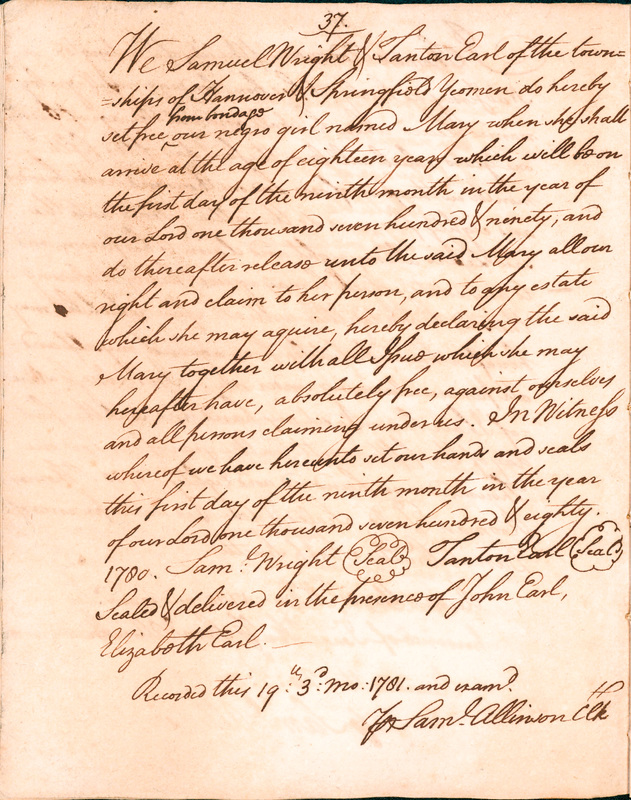
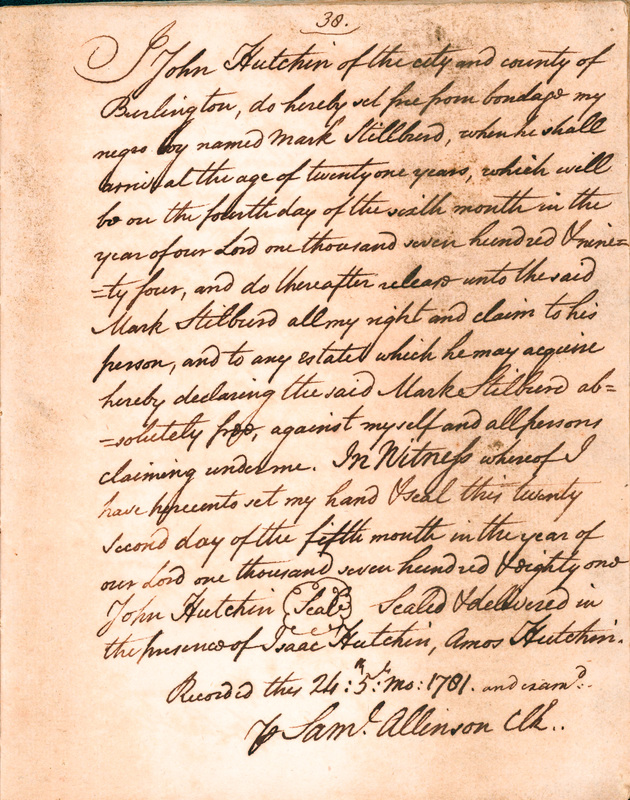
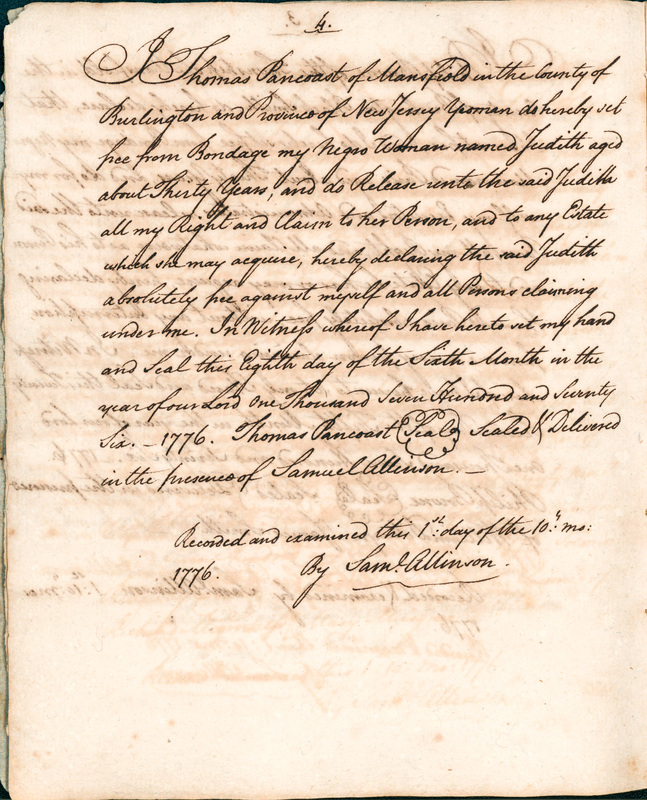
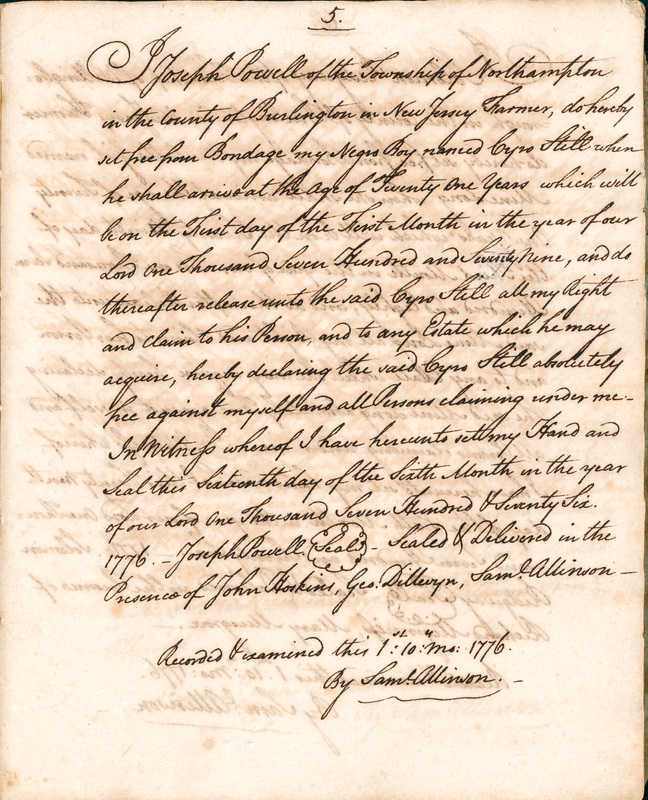
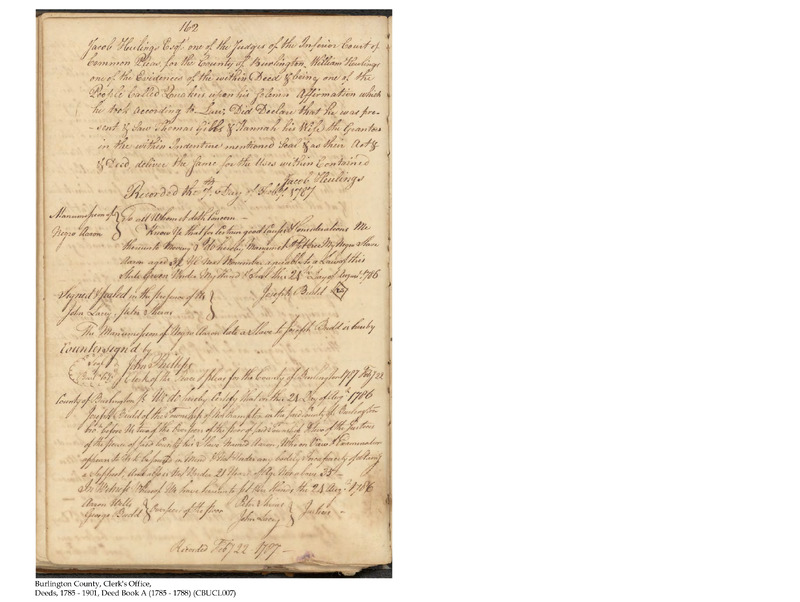
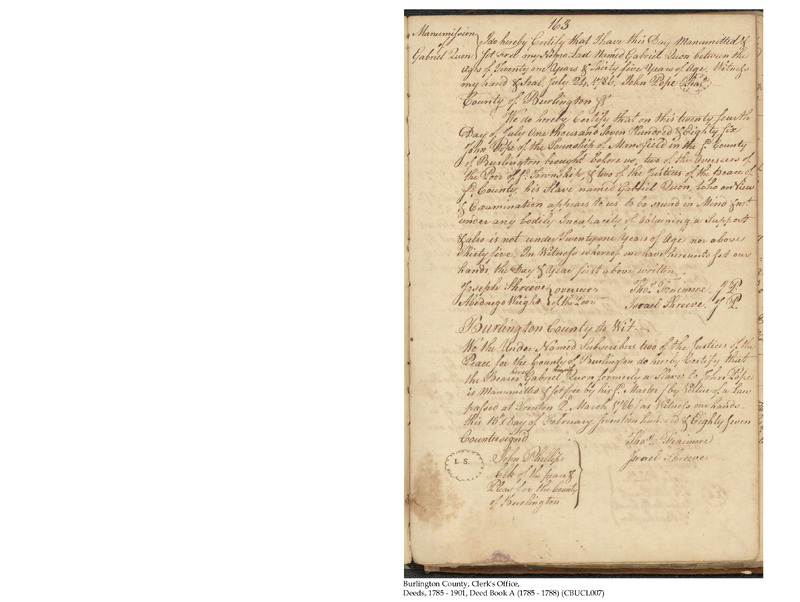
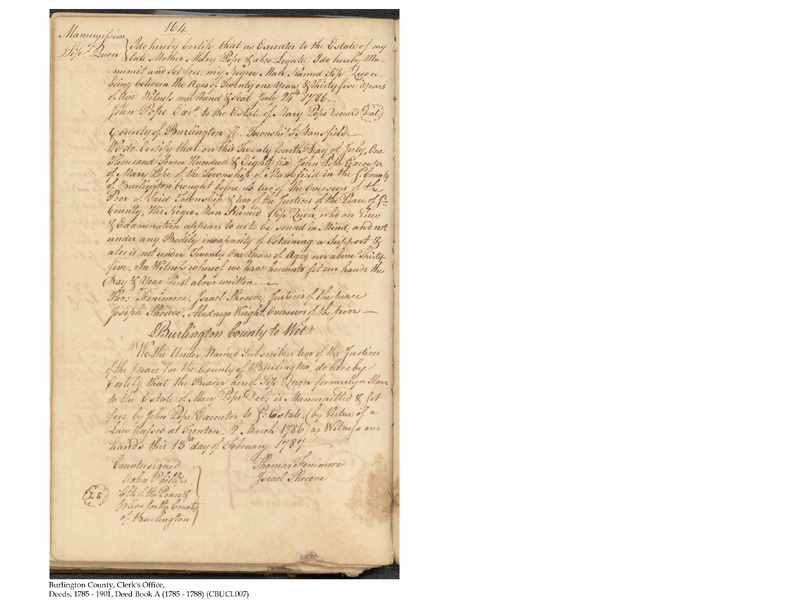
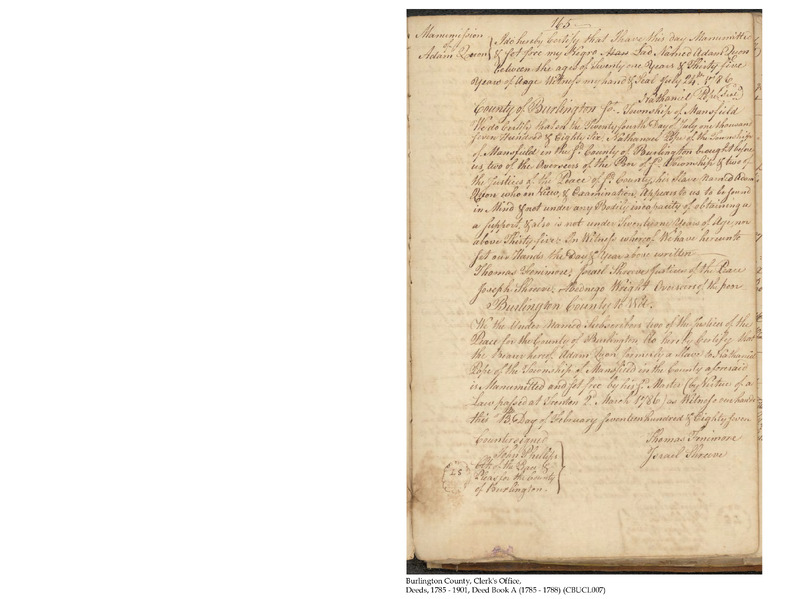
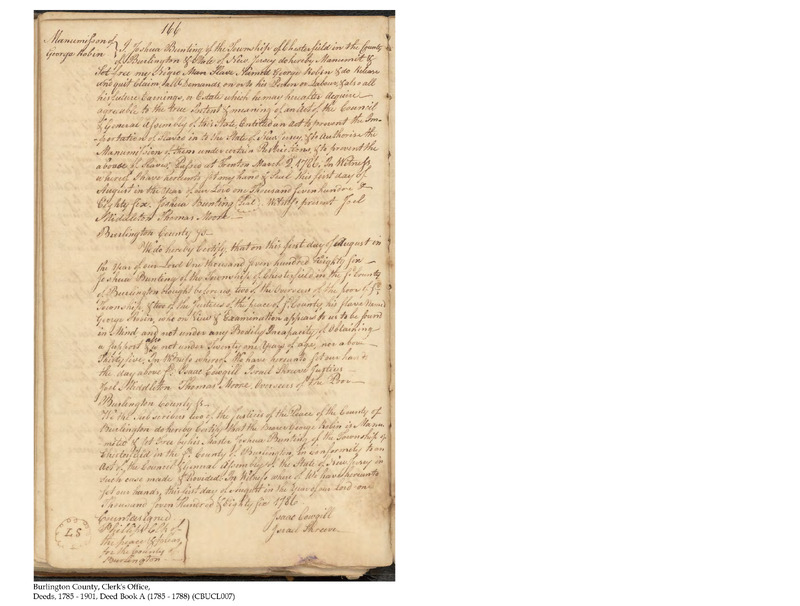
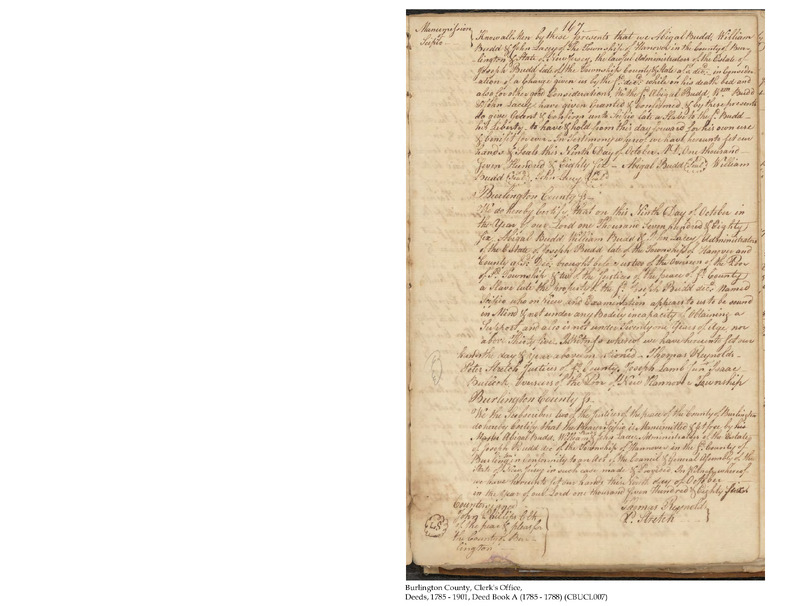
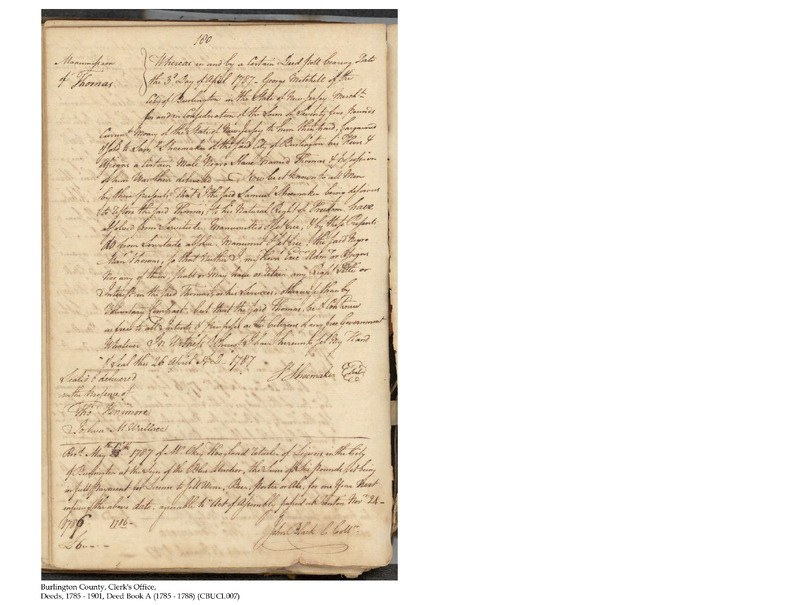
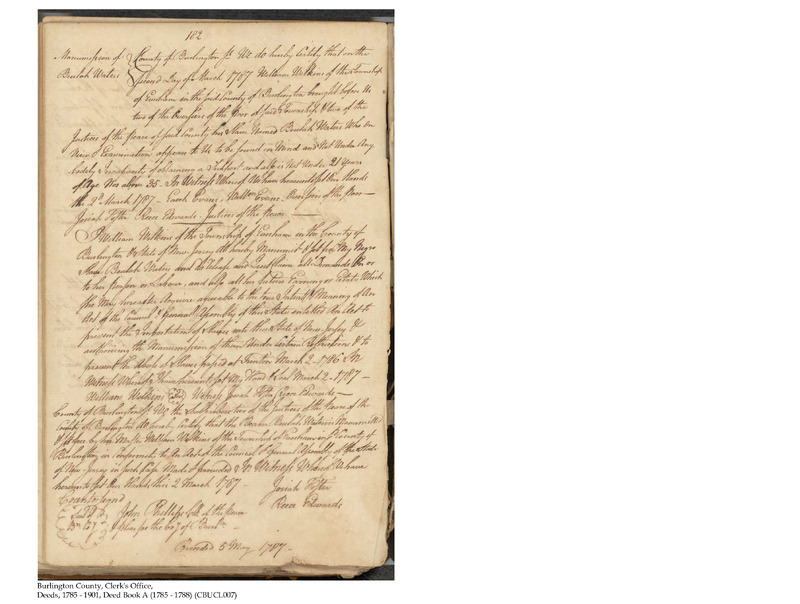
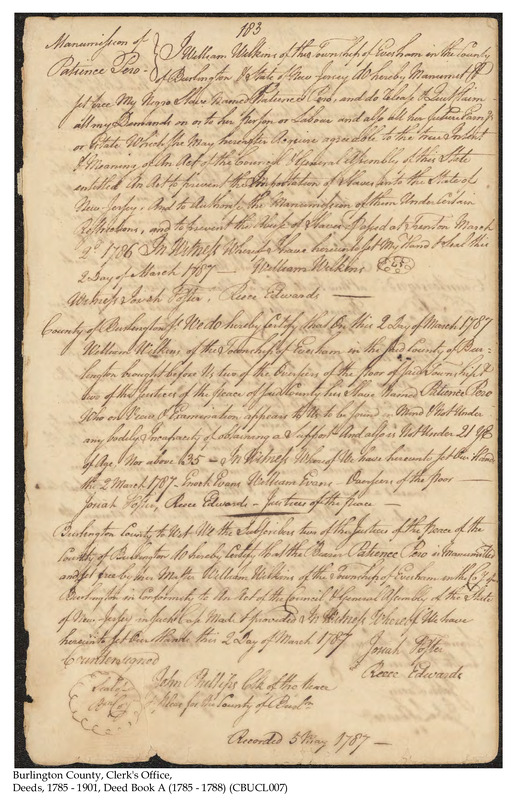
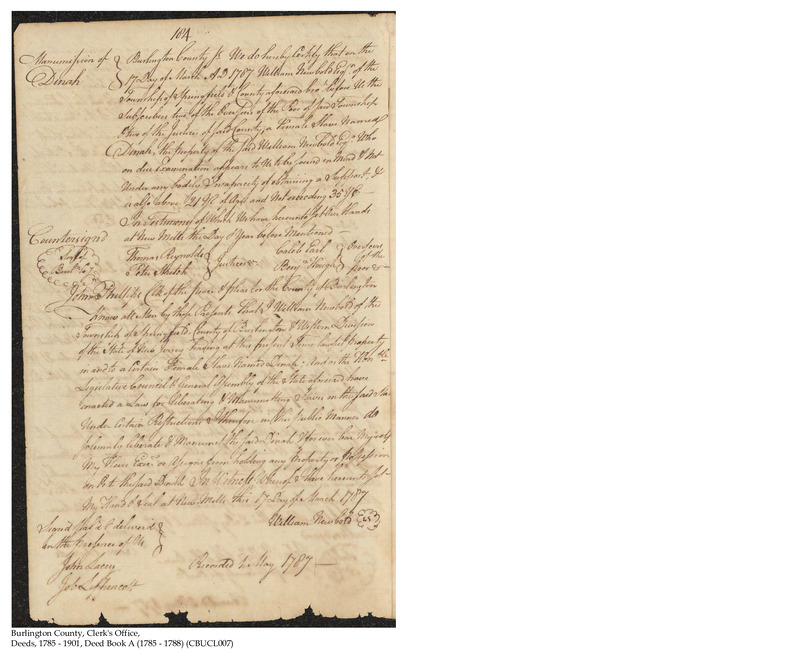
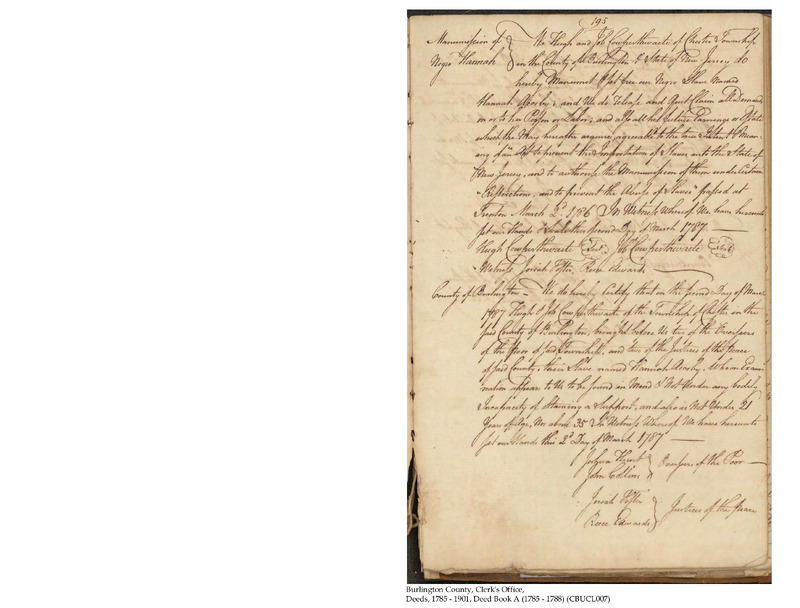
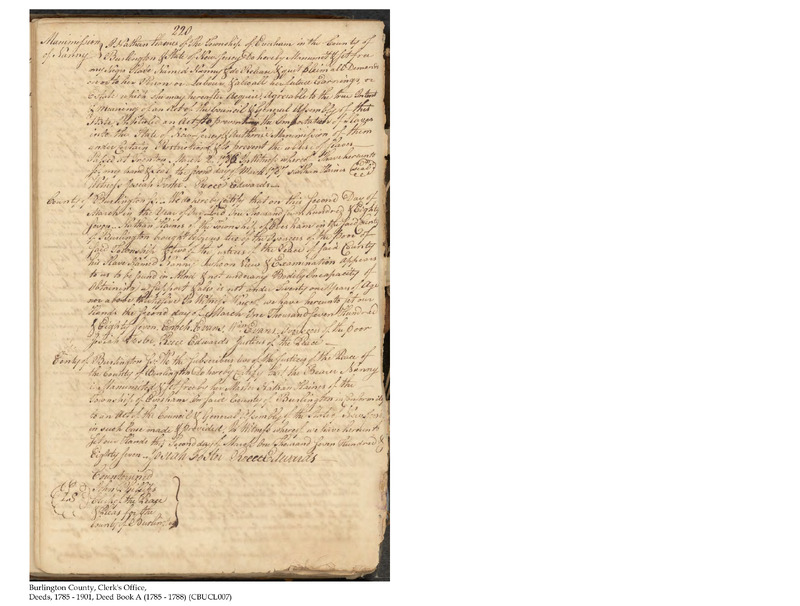
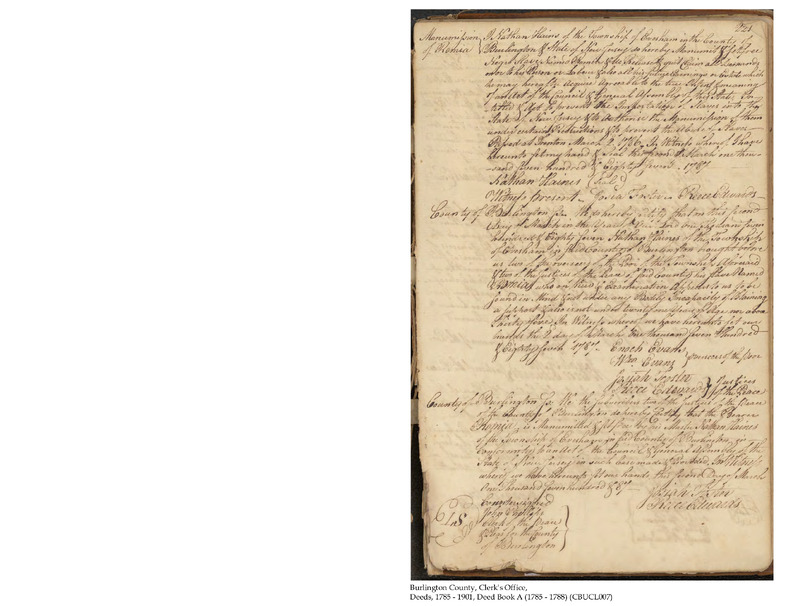
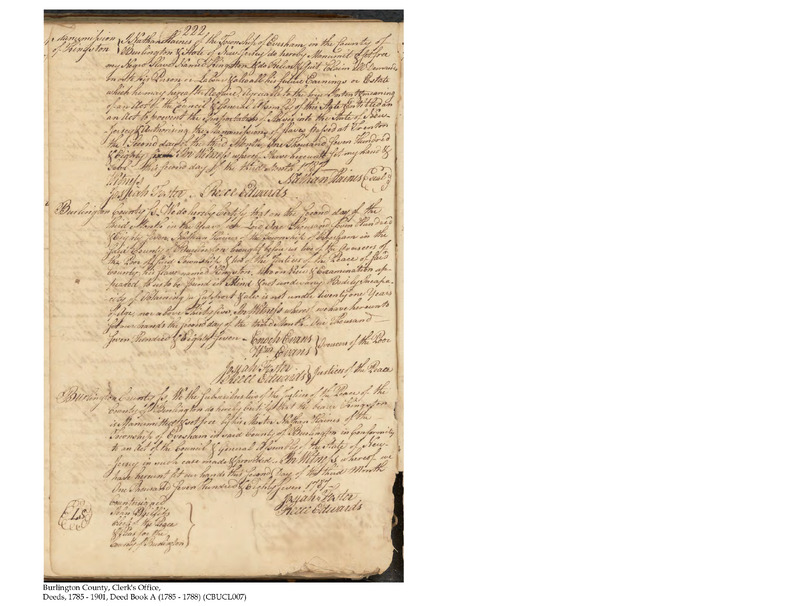
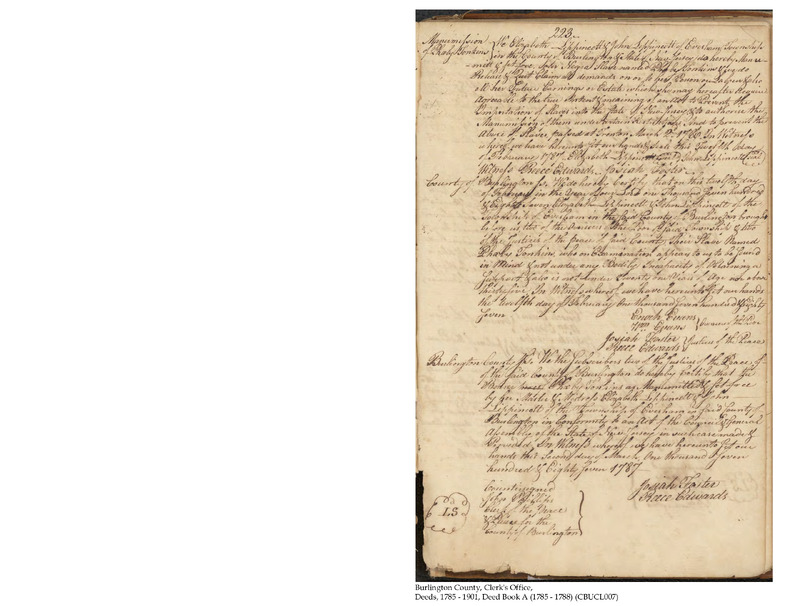
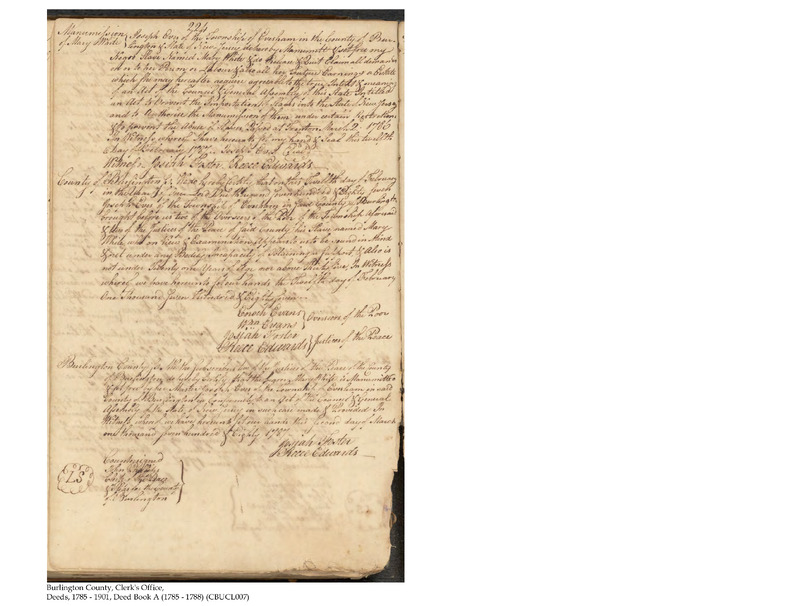
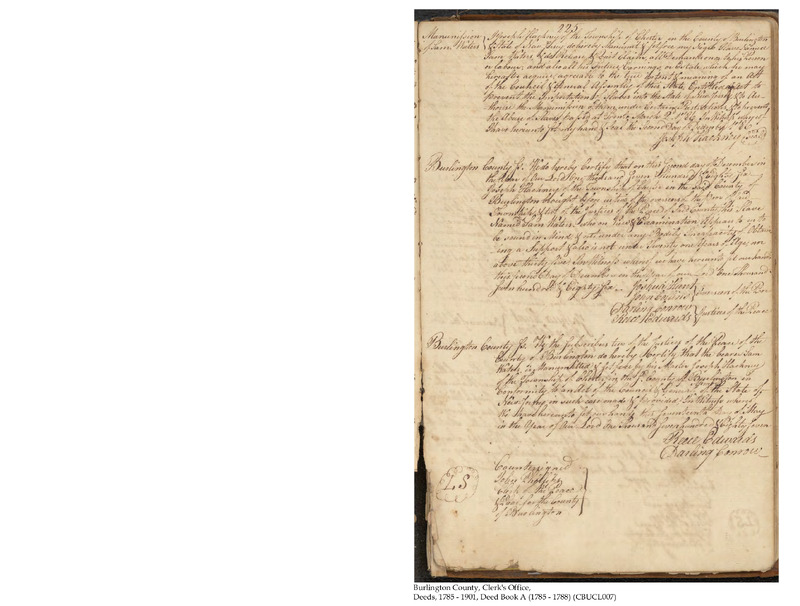
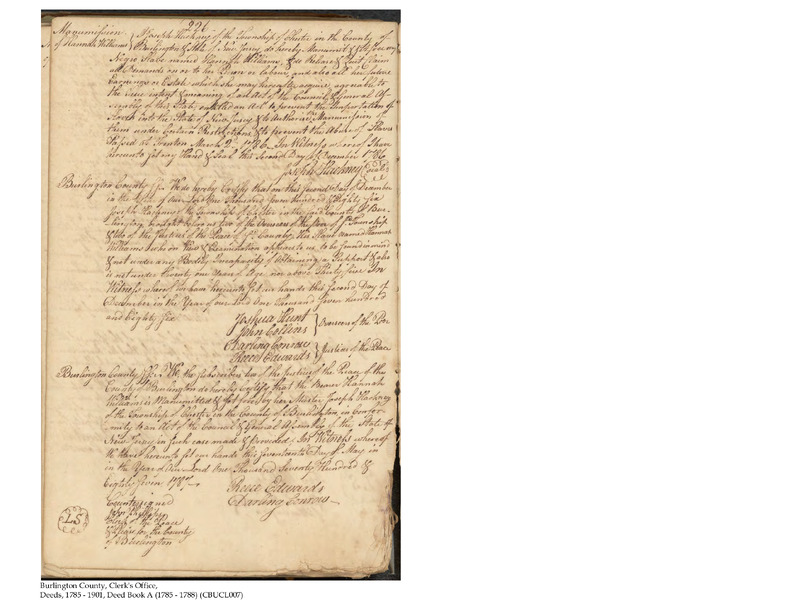
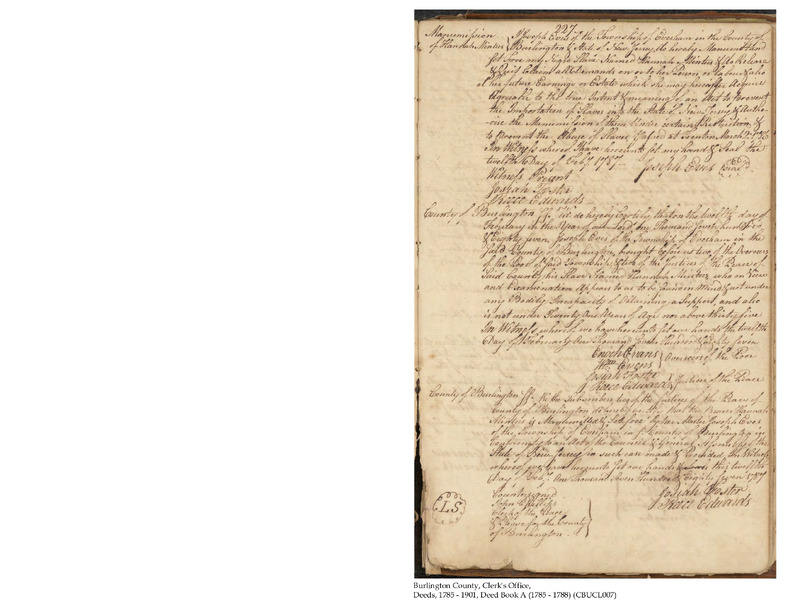
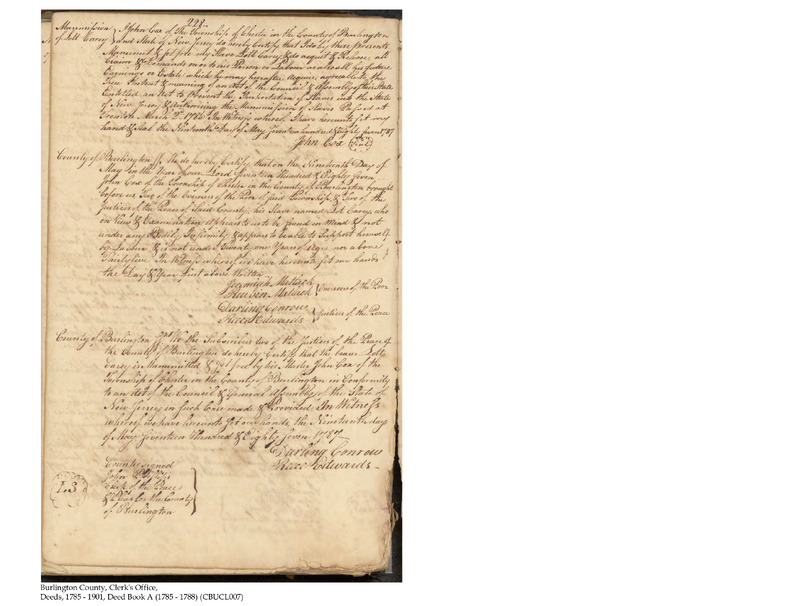
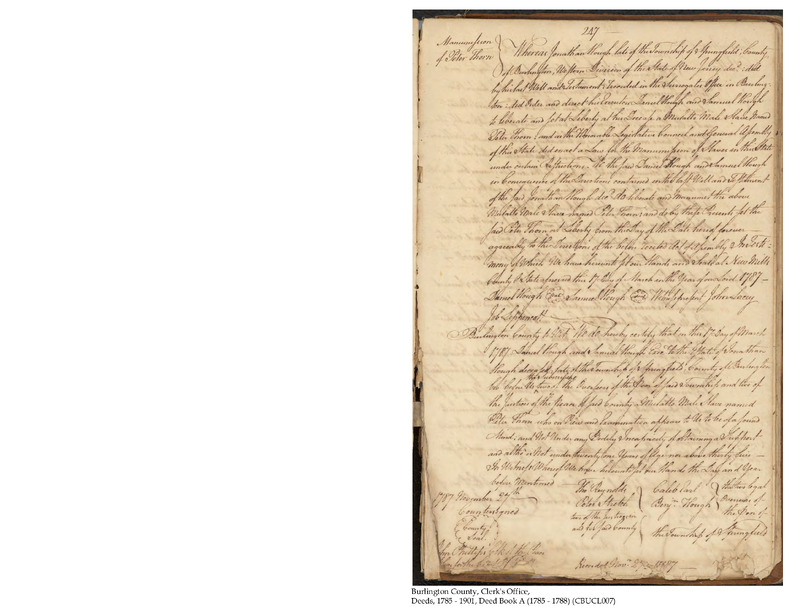
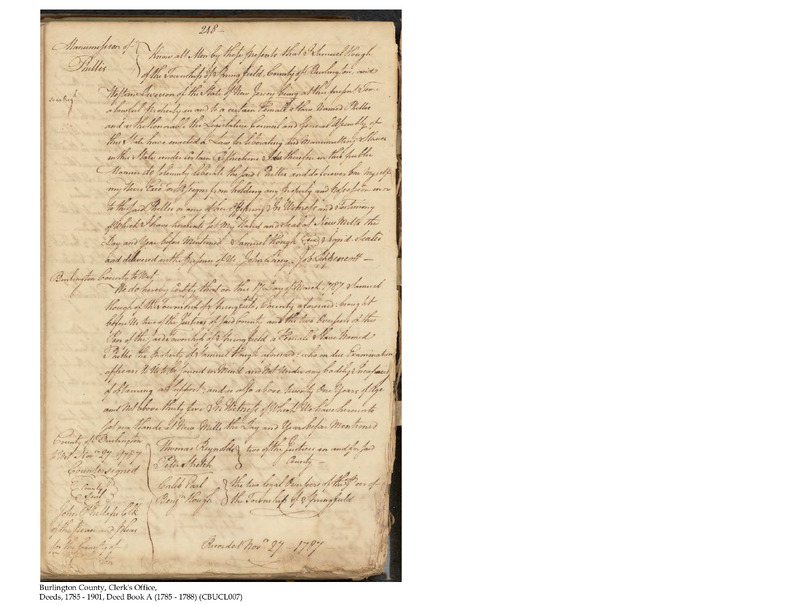
Deed Book A is a bound volume containing manuscript records recorded by the Burlington County Clerk from 1785 to 1788. The original book is housed at the New Jersey State Archives in the Burlington County Clerk's Office Deeds series (control number CBUCL007). Select pages from the book have been scanned by the State Archives and can be accessed via the State Archives' searchable database called Early Land Records, 1650-1900s. This book primarily contains land deeds and related property records. Intermixed with land deeds in this book are 22 manumission records.
The archival materials of the Burlington County Historical Society are housed at the Delia Biddle Pugh Library inside the Corson Poley Center in Burlington.
Byram is a township in Sussex County, New Jersey. It was incorporated in 1798 and was originally formed from a portion of Newton township. The township's borders shifted multiple times from the mid-19th to the mid-20th century as it exchanged territory with the surrounding communities of Green, Sparta, Brooklyn, Stanhope, and Hopatcong.
Mr. Dusenbery was an enslaver who resided in Mansfield Township, Sussex County (now part of Warren County), New Jersey, in the early 19th century. He submitted one birth certificate for an enslaved child to the Sussex County Clerk, and he signed the document with the first initial of his given name, which appears to be "C." His full name is uncertain.
Caesar was a Black man born circa 1755. He was 5 ft 8 inches tall and a survivor of smallpox. He was enslaved by John Denton of Princeton and ran away in 1780.
Caesar was a Black man who lived in the Mine Brook area near Basking Ridge in Bernards Township, Somerset County, New Jersey. He was born circa 1785. He was enslaved by David Kirkpatrick Sr. (1723-1814) and was mentioned in Kirkpatrick's will in 1801.
Upon the death of David Kirkpatrick Sr. in 1814, Caesar was bequeathed to Kirkpatrick's son, David Kirkpatrick Jr. Caesar continued living in Mine Brook since David Kirkpatrick Jr. also inherited his father's homestead.
In 1823, David Kirkpatrick Jr. manumitted Caesar and set him free. By the time Caesar gained freedom, he was 38 years old and had toiled for the Kirkpatrick family for decades.
The New Jersey Society for Promoting the Abolition of Slavery counted the number of free Black people who lived in Burlington, Burlington County, circa 1797 or 1798. This person's name appeared on the list. He was listed as "Csar M" with a wife, three sons, and a daughter.
Caesar Smith was a Black man who lived in Gloucestertown, Gloucester County (present-day Gloucester City, Camden County), in the early 19th century and was enslaved by Samuel W. Harrison. Gloucester County records indicate that Ceasar Smith was manumitted and released from slavery in 1804. Note that Samuel W. Harrison also manumitted a man named Thomas Smithers at the same time.
Caesar Trent was a Black man who lived in Princeton, NJ, in the 18th century. His name appeared on the Somerset County tax list starting in 1789. His name also appeared on the 1801 poll list for Montgomery Township, indicating that Ceasar Trent exercised his right to vote. He was married to a woman named Caty.
It appears that Caesar Trent held at least two Black persons in bondage. He published an advertisement offering to sell a Black man in 1795. Additionally, in 1793, a runaway ad for an indented Black man named Will Grigg, published by Edward Dunant in the Trenton newspaper New-Jersey State Gazette, mentioned that Will Grigg had "lately belonged to Caesar Trent, a negro in Princeton."
Caesar Trent is featured in the virtual exhibit When Women Lost the Vote: A Revolutionary Story, 1776-1807, at the Museum of the American Revolution. The virtual exhibit notes that Trent was accused and convicted of receiving stolen goods in 1808 and went to prison in Trenton for a year. The exhibit also discusses his properties in Maidenhead and Princeton and his death and estate settlement in 1813.
Cain was one of the victims of Jacob Van Wickle's slave trading ring in Middlesex County, New Jersey, in 1818. The legal documents related to the removal of Cain from the state of New Jersey to Louisiana suggest that he was born around 1796 and was aged 22 at the time of these events. However, Jacob Van Wickle falsified the age of some of his victims, making young children appear older than they really were and listing some children as adults in order to circumvent parental consent rules. For this reason, the birth year for Cain is questionable.
The New Jersey Society for Promoting the Abolition of Slavery enumerated enslaved people who lived in Evesham, Burlington County, around 1797. This person’s name appeared on the list. See the related Registration event for more information.
The name of this person's enslaver was not recorded.
Camden City is the seat of Camden County, New Jersey. It is located on the Delaware River across from Philadelphia. The campus of Rutgers University–Camden is located downtown near the waterfront.
In the colonial era, the waterfront area of present-day Camden was known as Cooper's Ferry and included several ferry landings operated by the Cooper family. Cooper's Ferry served as South Jersey's main entry point where slave ships docked. Hundreds of captive Africans—those who had survived the Middle Passage—were brought on shore and sold here.
Originally, Cooper's Ferry and the surrounding community were officially considered part of Newton township in Gloucester County. Many slavery-era documents for the area list "Cooper's Ferry" and/or "Newton township, Gloucester County" as the location. The name Camden first became associated with the waterfront area of Newton township in the 1770s. In 1828, Camden City was incorporated as a distinct municipality, but it was still in Gloucester County. Then, in 1844, a large portion of Gloucester County broke off to form the new Camden County, and Camden City became its county seat.
Camden County is located in Southern New Jersey across the Delaware River from Philadelphia. It was formed from a portion of Gloucester County in 1844. See Gloucester County to learn more about the demographics of this area during the slavery era and to see related events and people.
The earliest municipalities that formed in this area during the colonial era were Gloucester, Waterford, and Newton (which would later break up into Camden, Haddon, and surrounding municipalities). These existed when the area was part of Gloucester County.
The area of present-day Camden County had a considerable concentration of free Black people in the early 19th century, with about 9 out of 10 Black residents being free by the year 1800 (before New Jersey began a state-wide gradual abolition program). In the 1840s, free Black communities of Saddlertown (located in present-day Haddon Township) and Free Haven (now called Lawnside) developed in Camden County. These communities played an important role in the Underground Railroad and served both as stops and, for some people, final destinations in their quest to liberate themselves from slavery. The borough of Lawnside was incorporated in 1926 as the first independent self-governing Black municipality north of the Mason-Dixon line. It remains a majority Black municipality. The Lawnside Historical Society, located inside the historic Peter Mott House, plays a central role in preserving Black history of Camden County.
Cape May is the southernmost county in New Jersey, located principally on the Cape May peninsula surrounded by the Delaware Bay and the Atlantic Ocean. It was one of the earliest counties formed during the colonial era and its boundaries have remained stable since 1710, except for the area around Dennis township, which was moved from Cumberland County to Cape May in the late 19th century. The unincorporated community of Cape May Court House in Middle Township serves as the county seat.
County demographics from the 1800 U.S. census, when slavery in New Jersey reached its peak:
In 1800, Cape May was by far the least populated county in New Jersey. It had a total population of 3,066, while the bordering Cumberland County, which was the 2nd least populated county in the state, had more than three times as many residents. Being the most sparsely populated county, Cape May also had the smallest Black population, numbering 178 (representing 5.8% of the county's population). Enslaved people outnumbered free Black people in Cape May, with 55.1% of the Black residents living in slavery, while the remaining 44.9% were free. It was the only county in the southern part of the state where the majority of the Black residents were still living in slavery, presenting a contrast with the neighboring counties where the vast majority of Black residents were free by this time. Cape May had 98 enslaved residents (3.2% of the county population) and 80 free Black residents (2.6% of the county population).
The earliest documented jail in Cape May County was built in 1705. In the 18th and 19th centuries, the jail was located in the area of Cape May Court House. Several different buildings have been used as the county jail since the colonial era, and the early buildings have not survived. The county sheriff was in charge of the jail.
Cape May Court House is an unincorporated historical community located within Middle Township, Cape May County, New Jersey. The area has also been known as Middle Town, Middletown, or Middleton in the past. Since the colonial era, Cape May Court House has served as the county seat where the county court and jail are located.
Somerset County birth records of enslaved children contain a birth certificate for Caroline, born on 20 May 1805, enslaved by Jacob Van Dike in Franklin Township. According to historical records for the early 19th century, Caroline's enslaver had a large farm in the area of Ten Mile Run (a community that lies at the border of Franklin Township, Somerset County, and South Brunswick, Middlesex County). Caroline may have been born in that area.
Somerset County birth records of enslaved children contain a birth certificate for Caroline, child of Jude, born on 19 January 1827, enslaved by Peter Voorhees in Montgomery.
Caroline was a woman of African descent who was enslaved by Robert Adrain of New Brunswick, NJ. She gave birth to a baby boy named Alfred on February 14, 1832. According to Alfred's birth certificate, which was filed with a delay, Caroline had died before the certificate was filed on September 14, 1833.
The Casper and Abraham Shafer Grist Mill Complex is located at 928 Main Street in Stillwater Township, Sussex County, New Jersey. As of 2009, the property is on the National Register of Historic Places. The site is named for the original owners who established the mill in the 18th century, although most of the surviving structures at the mill complex date from the 19th century. Related historic structures in Stillwater include Casper Shafer's 18th-century stone house on Main Street and another dwelling, located across the Paulins Kill on Cedar Ridge Road, that is known locally as Casper Shafer's slave quarters.
Note that the name of the mill's owners is variously spelled Shafer, Shaver, or Schaeffer in historical documents and local histories.
Casper Shafer, an early German settler of Stillwater, established a mill on his property along the Paulins Kill in the early 1740s. The original mill was located about 1500 feet northeast of the current mill building. Around 1764, Shafer built a new gristmill at the current location; he also added a linseed-oil mill and a sawmill around this time. The mill was the commercial center of Stillwater.
After Casper Shafer's death in 1784, his son Abraham Shafer took over the industrial complex and rebuilt and expanded it in the late 1790s, adding a tannery near the mill. Before his death in 1820, Abraham Shafer added a fulling mill, a distillery, and a weaving shop. Sussex County records, as well as the family history written by the Rev. Dr. Casper Schaeffer (1784-1857), indicate that as many as a dozen enslaved Black people labored at Abraham Shafer's mill and house in the early decades of the 19th century.
The 18th-century mill structure burned down in 1844 and was immediately reconstructed by Abraham Shafer's sons; that 1844 mill building has been preserved to the present day.
Casper Shaver (also Schaeffer, Shafer) immigrated from Germany to Philadelphia around 1738, and shortly thereafter came to settle in Sussex County, New Jersey. He was one of the founders of Stillwater, a rural community in Sussex County. He established a prosperous mill operation and was a civic leader before and during the American Revolution, serving as a delegate to New Jersey's Provincial Congress of 1776. He was an enslaver, according to local and family history books.
He built a mill on the Paulins Kill and a stone house on Main Street. The mill is now on the National Register of Historic Places and is known as the Casper and Abraham Shafer Grist Mill Complex. See the related place record for the Shafer Grist Mill to learn more about the property and the work performed there by enslaved laborers.
Local historians also attribute to him another dwelling, located across the Paulins Kill on Cedar Ridge Road, that is known locally as Casper Shafer's slave quarters, although less information is available about this dwelling and its use.
Cate was an enslaved woman, born around 1780, who was manumitted by John G. Schenck of West Windsor, NJ. The certificate of manumission was issued on June 7, 1815. The deed of manumission was executed on the same day. Cate was aged 35 at the time of manumission.
Cate was born in 1804, the child of Lydia (enslaved by Joseph Buckalew of South Amboy, NJ). Under the provisions of New Jersey's Gradual Abolition Act of 1804, she was considered a slave for a term of 21 years and would become eligible for emancipation upon reaching that age.
Cate was born in 1810, the child of Dinah (enslaved by Runyon Barkelew of North Brunswick, NJ). Under the provisions of New Jersey's Gradual Abolition Act of 1804, she was considered a slave for a term of 21 years and would become eligible for emancipation upon reaching that age.
Cate was a Black woman who lived in Princeton in the early 19th century and was enslaved by Robert Field Stockton, the owner of the Morven mansion. Somerset County records indicate that Cate was manumitted and released from slavery in 1829 in Montgomery Township (which then encompassed that part of Princeton where Morven is located).
Cate Centurian was an enslaved woman, born around 1792, who was manumitted by Henry Dye of West Windsor, NJ. The certificate of manumission was issued on December 18, 1820. The deed of manumission was executed on the same day and described Cate as a woman of "darkish complexion" who was "five feet three and a half inches high." Cate Centurian was aged 28 at the time of manumission.