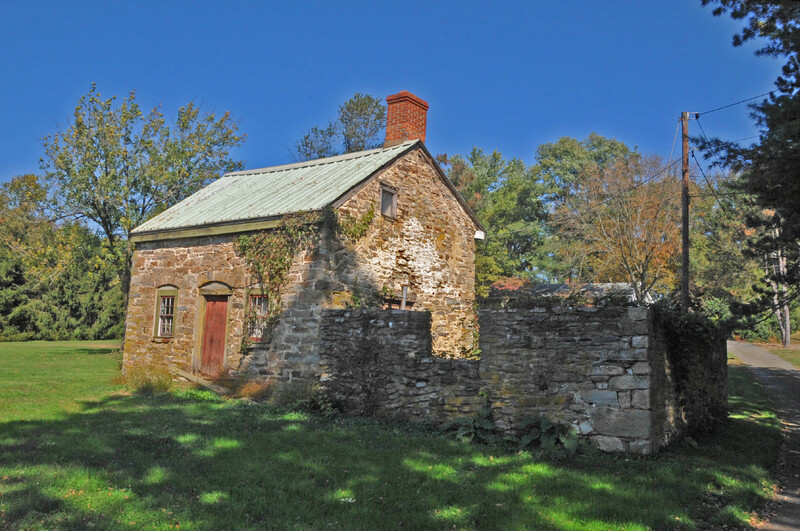
Charlotte was born circa 1806, the child of Margaret Lawrence (enslaved by John Rattoone of Perth Amboy, NJ). Under the provisions of New Jersey's Gradual Abolition Act of 1804, Charlotte was considered a slave for a term of 21 years and would become eligible for emancipation upon reaching that age.
Charlotte Titus was born in 1805, the child of Sarah TenBroeck and Thomas Titus (enslaved by Gerardus Beekman of South Brunswick, NJ). Under the provisions of New Jersey's Gradual Abolition Act of 1804, she was considered a slave for a term of 21 years and would become eligible for emancipation upon reaching that age in 1826.
Charlotte was mentioned in Gerardus Beekman's will, which noted that Charlotte should serve Beekman's widow Jane Beekman until Charlotte became eligible for emancipation under the law.
Charlotte's father Thomas Titus eventually gained freedom after many years of laboring in the Beekman household and purchased a farm for his family. See the related record for the Titus Farm, where a historical marker has been erected to preserve the memory of the Titus family. Charlotte kept the farm in the family after her father's death in 1849.
Chatham is a historical community in Morris County, New Jersey, which began as the village of Chatham before the American Revolution and was incorporated as Chatham Township in 1806. Today, there are two related municipalities that are collectively called "The Chathams," that is, Chatham Township and Chatham Borough.
Chester Township was a municipality that used to exist in Burlington County from 1688 until 1945. It originally encompassed the area in the northwestern corner of the county, along the Delaware River, between Pennsauken Creek and Rancocas Creek. Official records for the slavery era often refer to Chester Township, but this name is no longer in use in the modern era, and the original township has splintered into many smaller municipalities.
The largest municipality that has its roots in Chester Township is Moorestown. Other municipalities that are located on the former territory of Chester Township are Maple Shade, Cinnaminson, Palmyra, Riverton, Delran, and Riverside.
Chester Township was originally established in 1688. For a short period from 1690 to 1699, Chester Township was also known as Cropwell in court records. Several distinct villages developed within Chester, but they remained unincorporated during the 18th century. Chester began to splinter in 1860 when half of the township broke off to form Cinnaminson; this was the territory located along the Delaware River. In the following decades, Cinnaminson further broke apart, giving rise to Palmyra, Riverton, Delran, and Riverside.
By 1922, the remaining half of Chester Township splintered again, with Moorestown and Maple Shade breaking apart. The larger section—Moorestown—was incorporated as a separate municipality, while the smaller section—Maple Shade—retained the historical name of Chester Township for another 23 years. In 1945, Maple Shade residents officially renamed their municipality Maple Shade, and with that, the name Chester Township ceased to exist on the Burlington County map.
Note that the former Chester Township in Burlington County is not to be confused with Chester Township in Morris County, which was formed in 1799 and still exists today.
Chesterfield is a rural township in the northeastern section of Burlington County, New Jersey. The township was formed in 1688 and originally included a section along the Delaware River. By the mid-19th century, a population center called Bordentown developed in Chesterfield township near the Delaware River. Slavery-era documents related to Bordentown may be filed under Chesterfield township. Bordentown broke off from Chesterfield in 1852.
The remaining territory of Chesterfield township has remained rural to the present day. Today, the three main villages in Chesterfield township are Crosswicks, Chesterfield (formerly known as Recklesstown) and Sykesville (formerly known as Plattsburg). Crosswicks is the oldest English settlement in the area; it was established in 1677 by a group of Quakers.
Chloe was a Black girl enslaved by Isabella Kearney who had a farm in the Marsh's Bog area (present-day Farmingdale), Monmouth County. She was baptized in Shrewsbury.
Choisi was a Black man who lived in Princeton in the late 18th century. He was enslaved by Mr. Tulane and ran away in 1796. Choisi spoke French and Creole and was not very proficient in English, which suggests that he likely arrived in New Jersey from the French Caribbean.
Christeen was one of the victims of Jacob Van Wickle's slave trading ring in Middlesex County, New Jersey, in 1818. The legal documents related to the removal of Christeen from the state of New Jersey to Pointe Coupee, Louisiana, suggest that she was born around 1781 and was aged 37 at the time of the events in 1818. Christeen left the state with her two daughters Diannah (age 9) and Dorcas (age 1).
Christian Cox was a Black woman who lived in Great Egg-Harbour Township, Gloucester County (later called Egg Harbor, Atlantic County), in the early 19th century and was enslaved by Elijah Smith. Gloucester County records indicate that Christian Cox was manumitted and released from slavery in 1816.
Christopher Beekman was an enslaver who resided in Middlesex County, New Jersey, in the early 19th century. In 1808, he listed his residence as being near Six Mile Run in Middlesex County.
The New Jersey Society for Promoting the Abolition of Slavery counted the number of free Black people who lived in Chester Township, Burlington County, in 1797. This person's name appeared on the list as "Christopher Wilson & family," with 4 people counted in the household.
Cinnaminson is a township in the northwestern section of Burlington County, New Jersey. Prior to 1860, this area was part of the historical Chester Township. Cinnaminson broke off from Chester in 1860. In the following decades, Cinnaminson further broke apart, giving rise to Palmyra, Riverton, Delran, and Riverside.
Researchers of slavery in Cinnaminson may also want to review records filed under Chester Township, since that was the main administrative entity for this area during the slavery era.
Clara was a woman of African descent who was born in New Brunswick, NJ, on September 14, 1812, to parents Ambo and Mark Harris Sr. Clara's parents were both enslaved at the time of Clara's birth, but Ambo would eventually become free when enslaver John Neilson manumitted her.
Clara's birth was reported to the Middlesex County Clerk by enslaver John Neilson, who was the legal owner of her mother Ambo. Under New Jersey's gradual abolition law, Clara was considered a "slave for a term" of 21 years, and she was bound to serve John Neilson and his heirs until the year 1833 when she would become eligible for emancipation.
Clara was the oldest of Ambo and Mark Harris Sr.'s four children. Her younger siblings were Ann, Eliza, and Mark Jr.
Clara Voorhees was a Black woman who lived in Princeton and worked for many years as a cook on Princeton University's campus in the 19th century. Information about her life comes from her obituary, published in the Princeton Press newspaper after her death in 1896. Voorhees was Clara's married surname; her husband predeceased her by many years, and his first name was not mentioned in Clara's obituary.
According to the obituary, Clara Voorhees's family bible said that she was born on May 10, 1793, and she had a twin sister named Flora Stryker. Clara and Flora were born into slavery and grew up in the household of enslaver Matthew Rue near Scott's Corner (a place in present-day Plainsboro, which would have been part of South Brunswick at that time). Matthew Rue sold the girls to John Joline of Princeton. The obituary states that the sale took place in 1806 and that the girls would have been aged 17 at this time (although this timeline does not fully line up with the statement that they were born in 1793).
The obituary notes that, when John Joline bought Clara and Flora, an agreement was made that they would serve him until age 25, at which time he would release them from slavery. This statement is questionable. Clara Voorhees eventually attained freedom, but the actual date of her manumission is uncertain, and she may have been older than 25. A manumission certificate for her has not been found in Somerset County to date. However, the Somerset County Clerk's Office has a manumission certificate for her sister Flora Stryker, who was set free by John Joline in 1833. By that time, Flora Stryker was about 39 or 40 years old. An enslaved person in New Jersey had to be under the age of 40 to be eligible for manumission; in other words, John Joline waited until the last possible moment to manumit Flora Stryker, and he certainly did not manumit her when she was 25 years old. Considering the fate of her sister Flora, Clara Voorhees may not have been freed at age 25.
John Joline was well known as the innkeeper of the Nassau Inn in Princeton, which he operated from 1812 to 1836. Clara Voorhees's obituary notes that she worked at the famous hotel for about a year after John Joline bought her. John Joline then hired out Clara to other households (or possibly sold her). The obituary provides a list of other households where Clara Voorhees worked both before and after she attained freedom. These include the households of Joseph Bullock, Rev. George S. Woodhull, and then, for a long time, the family of Princeton President Ashbel Green. In her later years, she was with the family of Dr. Schanck.
Clara Voorhees was well-known as a cook and was in charge of cooking commencement dinners at Princeton University for decades. In addition to the substantial obituary published by the Princeton Press, the New York Times also published a short obituary noting Clara Voorhees's fame as a cook on Princeton University's campus.
Eventually, Clara Voorhees was able to purchase the house where she lived on Witherspoon Street, and this is the location where she passed away in January 1892.
Clarabela was an enslaved woman who lived in New Jersey in the early 19th century and was manumitted by Josiah Skilton of West Windsor, NJ, on April 20, 1804. Clarabela was aged 21 to 40 at the time of manumission.
Claresse was one of the victims of Jacob Van Wickle's slave trading ring in Middlesex County, New Jersey, in 1818. The legal documents related to the removal of Claresse from the state of New Jersey to Louisiana suggest that she was born around September 1795 and was aged 22 years and 6 months at the time of the events in 1818. Claresse left the state with her son Hercules, who was aged 2 years 10 months and 7 days when the removal certificate was issued on March 9, 1818.
Sussex County Births of Enslaved Children microfilm contains a birth record for Clarissa. Her birthday was recorded as July 4, 180[?] with the last digit in the birth year being illegible due to an ink stain. Since birth certificates were required only for children born in 1804 or later, we can infer that Clarissa was born between 1804 and 1809.
Sussex County Births of Enslaved Children microfilm contains a birth record for a girl named Clarry, born on September 22, 1808. The names of her parents were not recorded on the birth certificate. She was originally enslaved by John Axford and his wife Abigail Axford née Hunt of Oxford Township (then located in Sussex County, but now part of Warren County). Clarry's original enslavers both died when she was an infant. Two Black people named Jack and Isabel were enumerated in the inventory of John Axford's estate in 1809. It is possible that Isabel was Clarry's mother, but this has not been definitively confirmed.
Clary was a Black woman enslaved by Elizabeth Paul of Oxford Township, NJ, in the early 19th century.
Clary had several children, as reported by Elizabeth Paul to the Sussex County clerk. Clary had sons named Lowery Brown, Ephraim Hamlet, and Francis.
The New Jersey Society for Promoting the Abolition of Slavery enumerated free Black people who lived in Evesham, Burlington County, around 1797. This person’s name appeared on the list. See the related Registration event for more information.
This person was listed as "Clary Still," had 5 people in their family, property worth $30, and was deemed "industrious" according to a character reference.
Claus was a Black man who was enslaved in New Jersey in the early 19th century. He was one of the victims of the Van Wickle slave trading ring in Middlesex County. He was taken from New Jersey to Louisiana aboard the brig Mary Ann in March 1818. Slave traders Lewis Compton and Charles Morgan were indicted in June 1818 on charges related to trafficking Claus out of the state of New Jersey.
Somerset County birth records of enslaved children contain a birth certificate for Claus, born on 21 Apr 1808, enslaved by David Nevius in Franklin. The name of Claus's mother was not listed on the birth certificate.
Claus was a Black man who resided in the area of Preakness, Bergen County (now in Passaic County), in the early 19th century. His freedom status is uncertain. In 1805, he was convicted of murdering a close associate of his named Joe, who was a Black man enslaved by Mr. Van Orden of Preakness. According to the news reports that came out when Claus was convicted, his conflict with Joe stemmed from Joe's alleged love affair with Claus's wife. Claus was executed on June 28, 1805, in Hackensack.
Sussex County Births of Enslaved Children microfilm contains a birth record for Clinton. His mother's name was not recorded. His enslavers were David Phillips and David's wife Abigail Phillips.
The congregation of the Clove Church in Wantage, Sussex County, NJ, was formed in 1787 under the auspices of the Classis of New Brunswick of the Dutch Reformed Church. Elias Van Bunschooten was installed as pastor of the Clove Church and served in that capacity for nearly three decades until his death in 1815. Van Bunschooten came from a wealthy slaveholding family in Dutchess County, New York. He purchased a 1000-acre plantation at Clove, and he exploited enslaved labor while he was pastoring the Clove Church.
During Van Bunschooten's time, the congregation worshiped in a log meeting house. After Van Bunschooten's death, the church was reorganized as a Presbyterian congregation and a new building was erected in 1829 near where the log meeting house once stood. That 1829 church building is now on the New Jersey and National Registers of Historic Places, known as Old Clove Church or alternatively as the First Presbyterian Church of Wantage.
Also associated with the church is the Old Clove Church Cemetery across Route 23, with graves dating back to the 18th century. Elias Van Bunschooten was originally interred there, although the General Synod subsequently removed his remains and had them reinterred at the Necropolis at the First Reformed Church of New Brunswick.
Cohansey is the name of a large river that flows through what is now Cumberland County. Colonial records in the late 17th century mention "Cohansey territory" in Salem County; this essentially refers to the entire area that would later become Cumberland County. This large territory was split into two townships in 1697: the Cohansey Township and the Fairfield Township. The boundaries of these two townships remained only loosely defined.
The Cohansey Township was dissolved as an administrative unit in 1748 when Cumberland County was created from the southeastern half of Salem County. Cumberland County was initially divided into 6 precincts, and none of them were called Cohansey. A small village called Cohansey Bridge (located on the Cohansey River) became the Cumberland County seat. The village would eventually grow into a city called Bridgeton.
Between 1748 and 1848, there was no municipality called Cohansey in Cumberland County. For a brief period from 1848 to 1865, a small area on the west side of the Cohansey River formed a new municipality called Cohansey Township. By 1865, this township dissolved when it merged with the area across the river to form a unified municipality called Bridgeton City.
The Col. John Van Cleve Homestead, also known as the Hopewell Township Poor Farm, is located at 44 Poor Farm Road in Hopewell, Mercer County, New Jersey. The property is on the National Register of Historic Places.
This property is a historical site of enslavement as Hunterdon County records indicate that Col. John Van Cleve (1757-1814) held Black people in bondage in the early 19th century. One of the structures on the property is the Old Van Cleve Farmhouse, built in the 18th century for the Van Cleve family. Another structure is the poor farm that was established on this property after Col. John Van Cleve's death.
The New Jersey Society for Promoting the Abolition of Slavery counted the number of households that held people in slavery in Burlington circa 1797 or 1798. This person's name appeared on the list of slaveholders with 1 enslaved female person counted in the household. This person was listed in the 'French' column, indicating that this was a Francophone household and likely one of those who came to New Jersey from Saint-Domingue during the Haitian Revolution.
Cooper Street Ferry is a historical site in Camden where captive Africans were sold after disembarking from slave-trading ships. No physical features of the ferry site remain, but a historical plaque was erected in 2017 to mark the site. The historical marker is located in the southwest section of Johnson Park, at the corner of Cooper Street and Front Street. This location is part of the Rutgers University–Camden campus. Two related historical markers also memorialize the nearby Federal Street Ferry and Cooper's Poynt Ferry locations.
The historical marker text reads as follows:
"African slavery in New Jersey began with early European settlement. By 1766, circa 800 captive people had been sold here at Coopers Street Ferry and two other near ferry landings. In Africa, approximately 24 million men, women and children marched to coastal prisons. Only half survived the journey. These 12 million survivors then endured deplorable conditions on the Middle Passage ocean crossing, where an additional 2 million died from disease, malnutrition, dehydration, drowning, suicide and abuse. By 1800, New Jersey enslaved African population exceeded 12,000. New Jersey was the last Northern state to emancipate, adopting gradual abolition in 1804 and finally ratifying the 13th Amendment on January 23, 1866."
The ferry at the foot of Cooper Street was the oldest of the ferries operated by the Cooper family during the colonial era. It was the first river crossing to connect New Jersey and Philadelphia. After crossing the Delaware River, the ferry boat would stop at the foot of Arch Street on the Philadelphia side. The ferry crossing was originally established by William Roydon, who acquired a license to operate a ferry in 1688. By 1693, William Roydon sold the ferry and the surrounding land to William Cooper (1632-1710), who quickly transferred it to his son Daniel Cooper (1673-1715), setting up Daniel as the ferry operator. After Daniel Cooper's death, his son William Cooper operated the ferry and expanded the family's land holdings along the waterfront. It is during William Cooper's tenure that we find the earliest documentary evidence of slave trading at this location in 1727.
By 1728, William Cooper's cousin Benjamin Cooper (d. 1772) was operating a second ferry at Cooper's Poynt. William Cooper's original ferry location became known as "the old ferry." In the 1740s, William's son Daniel Cooper (d. 1776) also went into the ferry business, acquiring land from his father and establishing a ferry terminal at the foot of the present-day Federal Street. For information about these other ferry terminals and the slave trading activities that took place there, see the related records for Cooper's Poynt Ferry and Federal Street Ferry.
During the colonial era, the area surrounding the Cooper family's network of ferries was known as Newton Township, and it was officially part of Gloucester County. The waterfront area across from Philadelphia was generally referred to as Cooper's Ferry, but Cooper's Ferry was not incorporated as a distinct municipality. Thus, slavery records for this location may be found among Newton Township and Gloucester County records. The growth of Cooper's Ferry after the Revolution gave rise to the City of Camden, which was incorporated in 1828. Camden County broke off from Gloucester County in 1844. All of the Cooper family's ferries were located within the boundaries of present-day Camden City in Camden County.
Cooper's Poynt Ferry is a historical site in Camden where captive Africans were sold after disembarking from slave-trading ships. No physical features of the ferry site remain, but a historical plaque was erected in 2020 to mark the site. The historical marker is located in Cooper's Poynt Park. Two related historical markers also memorialize the nearby Cooper Street Ferry and Federal Street Ferry locations.
The historical marker text reads as follows:
"African slavery in New Jersey began with early European settlement. By 1766, circa 800 captive people had been sold here at the Coopers Point Ferry and two other nearby ferry landings. In Africa, approximately 24 million captured men, women, and children marched to coastal prisons. Only half survived the journey. These 12 million survivors then endured deplorable conditions on the Middle Passage ocean crossings, where an additional 2 million died from disease, malnutrition, dehydration, drowning, suicide and abuse. By 1800, New Jersey's enslaved African population exceeded 12,000. New Jersey was the last Northern state to emancipate, adopting gradual abolition in 1804 and finally ratifying the 13th Amendment on January 23, 1866."
The ferry at Cooper's Poynt was the second river crossing established by the Cooper family to connect the New Jersey waterfront to Philadelphia. Benjamin Cooper (1697-1772) operated this ferry from about 1728 until about 1762. From 1762 to 1764, Benjamin Cooper leased the ferry operation to a Philadelphia man named Roberts. Thus, during that brief period, historical records refer to this location as "Roberts' Ferry." Slave trafficking activities at this location peaked during Roberts's tenure. In 1765, the Cooper family took control of the ferry again, and Benjamin Cooper's son, Samuel Cooper, soon became the primary operator.
During the colonial era, the area surrounding the Cooper family's network of ferries was known as Newton Township, and it was officially part of Gloucester County. The waterfront area across from Philadelphia was generally referred to as Cooper's Ferry, but Cooper's Ferry was not incorporated as a distinct municipality. Thus, slavery records for this location may be found among Newton Township and Gloucester County records. The growth of Cooper's Ferry after the Revolution gave rise to the City of Camden, which was incorporated in 1828. Camden County broke off from Gloucester County in 1844. All of the Cooper family's ferries were located within the boundaries of present-day Camden City in Camden County.
A typescript mimeographed edition of the diary kept by the Rev. Oliver Hart, a Baptist minister in Charleston, South Carolina, and Hopewell, New Jersey. The diary enumerates key events in Hart's life from his birth in 1723 until his arrival in Hopewell in 1780.
Southern Baptist Theological Seminary's Boyce Digital Repository provides the following abstract of the item:
"Note Typescript. A copy of the diary was found in an old notebook kept by William O. Whilden. Dr. H.A. Tupper made use of the diary when he edited "two centuries of the First Baptist Church of South Carolina" in 1889, but the original is lost. This mimeographed edition was made by Loulie Latimer Owens. With: Items in relation to the Screvens."
Page 6 contains a record related to Dinah and her son Friday, who were purchased by Hart in 1771.
Additionally, page 15 notes that when Hart took over the Baptist Church in Hopewell in 1780, the congregation numbered 220 members, including 7 Black members (3 male and 4 female).
Cornelia McLaughlin Kennedy was a Black woman who lived in the area of Cooper's Poynt in Newton Township, Gloucester County (present-day Camden in Camden County). She was born around 1798. She was enslaved in the household of Joseph Cooper Esq. and his wife Elizabeth Cooper née Haines. Cornelia was manumitted in 1819, a few months after Joseph Cooper's death, in accordance with the instructions that Cooper had left in his will, which stipulated that Cornelia should be free when she reached age 21.
Cornelious was an enslaved man, born around 1782, who was manumitted by Joseph Barron of Woodbridge, Middlesex County, New Jersey. The certificate of manumission was issued on June 20, 1815. Cornelious was aged 33 at the time of manumission.
The Rev. Cornelius C. Vermeule was a Dutch Reformed minister and the son of Revolutionary War Captain Cornelius Vermeule Jr. (1757-1824). He graduated from Queen's College (later Rutgers University) in 1812. After receiving his degree, he served as a tutor at Queen's in 1812-1814, and was the professor of languages in 1814-1815. He then left New Brunswick and became the pastor of the Harlem Reformed Church in 1816.
He was an enslaver. During the time when he taught at Queen's College, he sold a Black man named Prince to John Neilson.
He was the first cousin of Dr. John Vermeule whose house in Green Brook Township is on the National Register of Historic Places.
Cornelius Jaques was an enslaved man, born around 1799, who was manumitted by John D. Jaques of Woodbridge, NJ. The certificate of manumission was issued on June 23, 1823. Cornelius Jaques was aged 24 at the time of manumission.
Cornelius Cinco, aka Cornelius Bloomfield, was a Black man born circa 1796. He was indentured to Benjamin Crow in Woodbridge, Middlesex County, and ran away from Crow in 1815.
Cornelius Van Horne was an enslaver who resided in Bridgewater, Somerset County, New Jersey, in the early 19th century. He was a Justice of the Peace for Somerset County.
Cornelius Van Horne (1693-1770) was born into a wealthy slave-trading family in New York. His father, Jan (or John) Van Horne (1669-1735), as well as his uncles Gerrit (1671-1737) and Abraham (1677-1741) and other family members, invested heavily in the slave trade. In the early 18th century, the family's ships transported captives between Africa and the Caribbean (primarily the islands of Barbados and Jamaica) and the ports of New York and Perth Amboy. Sometime in the 1720s, one of these ships brought the captive African named Ukawsaw Gronniosaw from Barbados to New York. Gronniosaw published his autobiography in England in the 1770s, where he made mention of "Vanhorn, a young Gentleman" who bought him from a slave-trading captain in Barbados and would eventually go on to sell him to the Rev. Theodorus Jacobus Frelinghuysen, a New Jersey minister.
Ryan Henley's research identifies Cornelius Van Horne as the likely enslaver of Ukawsaw Gronniosaw, and Helene van Rossum further confirms this connection using Somerset County historical documents and maps that intersect with Gronniosaw's narrative. Cornelius Van Horne may have been the merchant who originally brought Gronniosaw to New York from Barbados, or he may have acquired Gronniosaw upon the arrival of one of his family's ships in New York. After Gronniosaw's disembarkation, Van Horne brought him to New Jersey.
Cornelius Van Horne married Elizabeth French in 1718 at the Reformed Dutch Church in New York City and, by this marriage, soon acquired a large property in Somerset County, New Jersey. The property came from the estate of Elizabeth's father, Philip French, who left his children thousands of acres of land in Somerset County. In the 1720s, Cornelius Van Horne and Elizabeth French moved to Somerset County, although it appears that Cornelius continued spending time in New York City, because an advertisement published in 1724 mentioned that he had a "Plantation...on Rariton River" and could also be contacted in New York. The plantation was in a community then known as Raritan (now the area of Finderne in Bridgewater Township). Van Horne's house, known as "Kells Hall," was located very close to the Raritan Church (Reformed Dutch Church of Raritan), which was pastored by the Rev. Theodorus Jacobus Frelinghuysen, and the Van Hornes were members of the church. This connection between Van Horne and Rev. Frelinghuysen's Raritan Church is the reason that Cornelius Van Horne is believed to be the enslaver "Mr. Vanhorne" mentioned in Gronniosaw's autobiography.
Gronniosaw's autobiography also mentioned another Black person in Van Horne's household: an old man named Ned, who received a whipping from Van Horne on at least one occasion. Gronniosaw also mentioned multiple other servants, but did not specify whether they were Black.
Cornelius Van Horne was the father of Philip Van Horne (1719-1786), and his son purchased a nearby property in 1751. That property has been preserved and is now on the National Register of Historic Places, known as the "Van Horne House" in Bridgewater.
Cornelius Van Horne died circa 1770, as judged from the fact that his will was proved in May of that year.
Captain Cornelius Vermeule was an enslaver who resided in the vicinity of Bernards (formerly Bernardston), Somerset County, New Jersey, in the early 19th century. He was a Revolutionary War veteran.
Cornelius Wiltsee was a white man who lived in Newton Township, Gloucester County (present-day area of Camden and its surroundings in Camden County), in the early 19th century. He served as the Overseer of the Poor for the township.
Cortlandt Lewis Parker was an enslaver who resided in Perth Amboy, NJ. His parents were James Parker Sr. (1725-1797) and Gertrude Parker née Skinner (1739-1811), and his brother was James Parker Jr. (1776-1868) who donated land to Rutgers University (then Queen's College) to build the school's original campus in New Brunswick.
Costant (or possibly Constant) was a Black man born circa 1748. He was enslaved by John Williams Sanders of Princeton, NJ. He labored as a domestic servant and enjoyed playing the fiddle. He escaped from his enslaver in 1774, and Sanders published a runaway advertisement suggesting that Costant was trying to find a way on board a ship to the West Indies. It is possible that Costant was from the West Indies and was searching for a way home.
Cranbury is a township in Middlesex County, NJ. It was incorporated as a separate municipality in 1872, formed from portions of the surrounding townships, but the name was in use earlier and often appears on documents from the early 19th century, when it was usually written as "Cranberry." During the era of slavery in New Jersey, records related to the present-day area of Cranbury could also be found under South Brunswick Township or South Amboy Township.
Somerset County birth records of enslaved children contain a birth certificate for Creet and her twin sister Rach, daughters of Suk, born on 8 Apr 1805, enslaved by George G. Hall in Bridgewater.
Cuff was an enslaved man who lived in New Jersey in the early 19th century and was manumitted by Abraham Smalley of Piscataway, NJ, on August 27, 1804. Cuff was aged 21 to 40 at the time of manumission.
Cuff was born around 1782 and was enslaved by John Brown in Woodbridge, Middlesex County, New Jersey. Cuff was described by his enslaver as a "mulatto man" indicating that he was a person of mixed ancestry. Cuff ran away from John Brown in 1805.
Cuff was an enslaved man, born around 1784, who was manumitted by Samuel Willet of North Brunswick, NJ. His certificate of manumission was issued on June 12, 1811. Cuff was aged 27 at the time of manumission.
Somerset County birth records of enslaved children contain a birth certificate for Cuffe, son of Phillis, born on 2 Nov. 1805, enslaved by the Rev. Robert Finley of the Presbyterian Church in Basking Ridge, Bernards township.
Cuffee was a Black man born around 1788 who was enslaved by Lucas Hoagland in Griggstown, Somerset County, New Jersey. Cuffee ran away from Hoagland in 1807.
Cumberland County is located in Southern New Jersey on the Delaware Bay. The county seat is Bridgeton, located on the Cohansey River. European settlement in the area started in the late 17th century, when this territory was known as the Cohansey area of Salem County. In 1697, while the area was still part of Salem County, it was split into two large townships: Cohansey and Fairfield. In 1748, the eastern portion of Salem County broke off to form the new Cumberland County and was divided into six precincts: Greenwich, Stow Creek, Hopewell, Deerfield, Fairfield, and Maurice.
County demographics from the 1800 U.S. census, when slavery in New Jersey reached its peak:
In 1800, among New Jersey's 13 counties, Cumberland had the 2nd lowest overall population (9,529). It also had the 2nd lowest Black population in the state, numbering 346 Black residents, who made up only 3.6% of the county total. The majority of the Black residents were free, with 78.3% of Black people being free and the remaining 21.7% still living in slavery. Cumberland's free Black population numbered 271 (representing 2.8% of the county population), and enslaved population was 75 (representing 0.8% of the county population, and ranking the 2nd lowest in the state after Gloucester).
The archival materials of the Cumberland County Historical Society are held at the Warren and Reba Lummis Genealogical & Historical Research Library in Greenwich.
Cupied Still was a Black person who lived in Gloucestertown, Gloucester County (present-day Gloucester City, Camden County), in the early 19th century and was enslaved by George W. Hugg. Gloucester County records indicate that Cupied Still was manumitted and released from slavery in 1804.
Curtis was a Black boy born circa 1809, the son of Henny. He was enslaved by John Tennent Woodhull of Freehold and ran away together with his mother and a Black man named Stephen when he was 8 years old.
Cyrus (or Cirus) was an enslaved man who lived in New Jersey in the early 19th century. He had a son named Elias with an enslaved woman named Peggy. In 1811, his enslaver John Bergen of South Brunswick, sold Cyrus, Peggy, and infant Elias to Peter Kean of Ursino, Union Township (who was acting as an agent for Susan Ursin Niemcewicz).
Cyrus was an enslaved man who lived in New Jersey in the early 19th century and was manumitted by Samuel Groenendyke of South Brunswick, NJ. The certificate of manumission was issued on April 15, 1815. Cyrus was aged 21 to 40 at the time of manumission.
Cyrus was an enslaved man who lived in New Jersey in the early 19th century and was manumitted by John Scott of South Brunswick, NJ. The certificate of manumission was issued on April 15, 1815. Cyrus was aged 21 to 40 at the time of manumission.
Somerset County birth records of enslaved children contain a birth certificate for Cyrus, son of Phillis, born on 16 Apr. 1808, enslaved by the Rev. Robert Finley of the Presbyterian Church in Basking Ridge, Bernards township.
The New Jersey Society for Promoting the Abolition of Slavery counted the number of free Black people who lived in Burlington, Burlington County, circa 1797 or 1798. This person's name appeared on the list. He was listed with a wife.
Dan was a black boy born circa 1771. In the 1780s, he was enslaved in the household of Francis Hopkinson, a signer of the Declaration of Independence from New Jersey, and his wife Ann Hopkinson née Borden. Documents related to Dan place him in Philadelphia. The Hopkinsons maintained a residence in Philadelphia and another home in Bordentown, New Jersey, and it is possible that Dan would have spent time at their home in Bordentown while they were there.
Dan Hurd was an enslaver who resided in Sussex County, New Jersey, in the early 19th century. He lived in Hardyston township in the vicinity of present-day Sparta.
Daniel was an enslaved man who lived in New Jersey in the early 19th century and was manumitted by Thomas Jackson of Woodbridge, NJ. His certificate of manumission was issued on April 10, 1809. Daniel was aged 21 to 40 at the time of manumission.
Daniel was a Black boy enslaved by Isabella Kearney who had a farm in the Marsh's Bog area (present-day Farmingdale), Monmouth County. He was baptized in Shrewsbury.
Daniel was born in 1805, the child of Jude (enslaved by John Dunham of North Brunswick, NJ). Under the provisions of New Jersey's Gradual Abolition Act of 1804, he was considered a slave for a term of 25 years and would become eligible for emancipation upon reaching that age.
Daniel was born in 1805, the child of Nan (enslaved by Elijah Phillips of North Brunswick, NJ). Under the provisions of New Jersey's Gradual Abolition Act of 1804, he was considered a slave for a term of 25 years and would become eligible for emancipation upon reaching that age.
Daniel Agnew was a resident of Middlesex County, New Jersey. He served as the Justice of the Peace for the county in the early 19th century. In this official capacity, he issued manumission certificates for residents of West Windsor whose enslavers agreed to set them free.
Daniel Atchley was a resident of Middlesex County, New Jersey. He served as the Justice of the Peace for the county in the early 19th century. In this official capacity, he issued manumission certificates for residents of West Windsor whose enslavers agreed to set them free.
Daniel Baker was a white man who lived in Gloucester County, New Jersey, in the early 19th century. He served as a Justice of the Peace for the county and, in that official capacity, signed manumission documents in Egg Harbor Township (in the area of present-day Atlantic County).
Daniel Clark, also known as Benjamin Clark, was a Black man born in November 1781 in Kent County, Delaware. He was born into slavery and was originally enslaved to a man named Jenifer Taylor. In 1810, Jenifer Taylor transferred Clark to Ignatius Taylor, also a resident of Kent County, Delaware (whether this was a sale or another form of transfer is uncertain). Sometime after this, Clark escaped and came to New Jersey, where he settled in Newton Township, Gloucester County (this is now Camden and the surrounding area in Camden County). He did not want to live as a fugitive, and he sought to buy his freedom from Ignatius Taylor so he could be legally free. In 1824, Taylor agreed to let Clark buy his own freedom for the sum of $300. Clark found support in his new community and managed to raise $140 from his friends and allies for the transaction. After receiving $140, Taylor signed a manumission deed, legally freeing Clark. At the same time, Taylor also signed a bond, which stipulated that Clark still owed him the remaining $160.
Daniel Cooper was the son of William Cooper, the Quaker immigrant who was the first of the Cooper family to acquire land and settle in West Jersey in the 17th century. Daniel's father purchased ferry rights on the Delaware River in 1693 and promptly set up Daniel in business as an operator of a ferry that connected New Jersey to Philadelphia. This ferry was located at the foot of what is today Cooper Street in Camden. During Daniel's lifetime, this area was part of Newton Township, Gloucester County. The waterfront area where Daniel and his family lived became known as Cooper's Ferry (this would eventually grow into the city of Camden).
Daniel Cooper's son William Cooper took over the ferry when Daniel passed. Cooper's Ferry would eventually become a key entry point for enslaved Africans who were brought to New Jersey from Africa and the Caribbean as part of the transatlantic slave trade. The first known disembarkation of Africans at Cooper's Ferry occurred in 1727, during the period when William Cooper (Daniel's son) operated the ferry.
Daniel Cooper is known to have held at least four people in bondage, as evidenced by the inventory of his estate that was drawn up when he died in 1715.
Daniel Cooper (d. 1776) was an 18th-century ferry operator on the Delaware River across from Philadelphia (present-day Camden). His ferry terminal was located at the foot of present-day Federal Street.
Daniel's family had been in the ferry business since the 1690s, and the waterfront area of present-day Camden was known as Cooper's Ferry during the colonial era. Daniel's father, William Cooper, operated the ferry terminal at the foot of present-day Cooper Street, while his father's first cousin, Benjamin Cooper, operated a ferry terminal at Cooper's Poynt. Daniel purchased 100 acres of riverfront property from his father in 1744 and established a third ferry terminal shortly thereafter. In the 1760s, Daniel Cooper's ferry terminal became a major site of slave trading activities for the region.
Additionally, Daniel Cooper held several people in bondage in his household. The exhibit "Enslaved Africans of Pomona Hall" at the Camden County Historical Society highlights the following people who had been enslaved by him: Rose, Sylvia, Will, and Jack (who were part of his estate when he died in 1776), and Able Mitchfield, who eventually gained freedom. Images of documents related to some of these people are included in the exhibit.
Daniel Dodge was the original printer of the Centinel of Freedom newspaper, which was established in Newark in 1796. He was the owner of the newspaper for about three years. Dodge sometimes acted as a broker in slave sales that were advertised in his newspaper.
Daniel Duncan was an enslaver who resided in South Brunswick Township, Middlesex County, New Jersey, in the early 19th century. In an 1806 advertisement, he noted that his residence was 5 miles from Princeton.
Daniel Hough was a white man who lived in Springfield township, Burlington county, in the late 18th century. He was a co-executor of his brother Jonathan Hough's estate and, on behalf of the estate, manumitted a man named Peter Thorn in 1787.
Daniel J. Barricklo was a resident of Middlesex County, New Jersey. He served as the Overseer of the Poor of South Brunswick in the early 19th century. In this official capacity, he issued manumission certificates for residents of South Brunswick whose enslavers agreed to set them free.
Daniel La Tourrette was an enslaver who resided in Bridgewater, Somerset County, New Jersey, in the early 19th century. He submitted several birth certificates for a black mother named Eve and her children. The certificates listed his township of residence as Bridgewater, and at least one document specified Somerville (which was then part of Bridgewater township).
Daniel Leeds Jr was co-executor of the will of Richard Wescoat in Mays Landing, Hamilton Township, Gloucester County (now in Atlantic County), after Wescoat's death in 1825.