The New Jersey Society for Promoting the Abolition of Slavery enumerated black people (free and enslaved) who lived in Northampton, Burlington County, around 1797. This person’s name appeared on the list. See the related Registration event for more information.
Three people with the last name Plomery were listed in a row: Daniel, John, and Jacob.
Daniel Predmore was an enslaver who resided in Sussex County, NJ, in the early 19th century. Records related to him mention Newton and Frankford townships.
Daniel Williamson of Greenwich, Sussex County, was the executor of the estate of Ann Henderson of Alexandria, Hunterdon County. In this role, he was responsible for selling all the property of Henderson's estate, which included enslaved people. He submitted a birth certificate for a girl named Dinna on behalf of the Henderson estate.
Daphne was born in 1820, the child of Bett (enslaved by Andrew Bell of Perth Amboy, NJ). Under the provisions of New Jersey's Gradual Abolition Act of 1804, she was considered a slave for a term of 21 years and would become eligible for emancipation upon reaching that age.
Dave was a Black man enslaved by Robert Kennedy of Greenwich Township, Sussex County (now in Warren County), New Jersey, in the early 19th century.
He was likely the father of a boy named Dave who was born in the Kennedy household in 1806 to a woman named Dine.
Sussex County Births of Enslaved Children microfilm contains a birth record for Dave, son of Dine, enslaved by Robert Kennedy of Greenwich Township. The property where Dave was born and lived with the Kennedy family is now on the National Register of Historic Places, known as the Kennedy House and Mill.
David was an enslaved man who lived in New Jersey in the late 18th century. His year of birth is unknown. He was enslaved to Abraham Dean of Middlesex County. On December 15, 1794, Rev. Gilbert T. Snowden (1766-1797), a Presbyterian minister at Cranbury, purchased David from Abraham Dean. It appears that Snowden purchased David with the intention of liberating him. Four months after the sale, Snowden manumitted David, signing a deed of manumission on April 20, 1795. David was aged 21 to 40 at the time of manumission. A copy of the deed of manumission was recorded by the Middlesex County Clerk 13 years later in May of 1808; this might indicate that David was still living in the area as of 1808 and sought to have his freedom status recorded by the county officials.
David was an enslaved man who lived in New Jersey in the early 19th century and was manumitted by John DeBow of North Brunswick, NJ. The certificate of manumission was issued on May 4, 1824. David was aged 21 to 40 at the time of manumission.
David was a free Black man who lived in Trenton, NJ, in the early 19th century and was known as "black David." It is uncertain whether David was born free or was freed later in life. He had a son named Tom, born circa 1783, who was enslaved by Jacob Stryker in Princeton, NJ. It appears that David may have helped his son run away in 1804. See Tom's freedom seeking event for details.
David was born in 1808, the child of Rachel (enslaved by Isaac Story of South Brunswick, NJ). Under the provisions of New Jersey's Gradual Abolition Act of 1804, he was considered a slave for a term of 25 years and would become eligible for emancipation upon reaching that age.
David was born in 1811, the child of Catharine Evans (enslaved by Samuel Force of Woodbridge, NJ). Under the provisions of New Jersey's Gradual Abolition Act of 1804, he was considered a slave for a term of 25 years and would become eligible for emancipation upon reaching that age.
David Bowne was a resident of Middlesex County, New Jersey. He served as the Justice of the Peace for the county in the early 19th century. In this official capacity, he issued manumission certificates for residents of South Amboy whose enslavers agreed to set them free.
David Chambers was a resident of Middlesex County, New Jersey. He served as the Justice of the Peace for the county in the early 19th century. In this official capacity, he issued manumission certificates for residents of East Windsor whose enslavers agreed to set them free.
David Chambers was an enslaver who resided in Middlesex County, NJ.
He may be the same person as (or related to) David Chambers of East Windsor (Identifier: NJS-PER-00215).
David Coriell Jr. (c. 1762-1836) of Piscataway, NJ, was the son of David Coriell (c. 1735-1803). He was the Overseer of the Poor of Piscataway in the early 19th century. Middlesex County records indicate that he was an enslaver, and he manumitted a man named William in 1805.
David Cotheal was an enslaver who resided in Woodbridge, NJ, in the early 19th century. In 1823 he, jointly with Henry Cotheal, manumitted a Black woman named Ann.
David D. Chandler was the Clerk of Sussex County in the early 19th century. He was appointed in 1825. He was responsible for recording the births of enslaved children and manumissions of enslaved adults in the county.
David Dunham was a resident of Piscataway, Middlesex County, New Jersey. He was the son of Azariah Dunham (1718-1790) and Mary Tuxton. He was known as "Squire."
He served as the Justice of the Peace for the county in the early 19th century. In this official capacity, he issued manumission certificates for residents of Piscataway whose enslavers agreed to set them free.
Related men who share the same name in Piscataway are his uncle (father Azariah's brother) David Dunham (1723-1806) and first cousin (uncle David's son) David Dunham Jr. (1755-1812).
David Dunham Jr. was an enslaver who resided in Piscataway, NJ. He was the son of David Dunham (1723-1806) and Rebecca Dunn Dunham. His signature in 1805 indicated "Esquire" after his name.
David Ford was an attorney and one of the incorporators of the Morris Turnpike Company, chartered 9 Mar 1801, and the first turnpike company in Morris County. He was also connected to the Morris Academy, founded in 1791.
He was the executor of the will of Isabella Kearney of Hanover, Morris County, and in that capacity executed the manumission of Mars Willson.
General David Forman (1745-1797) was a wealthy enslaver and Revolutionary War veteran from Monmouth County, New Jersey. He was the son of Joseph Forman and Elizabeth Lee. His father prospered as a merchant in New York City and then moved to an estate in Freehold Township, Monmouth County. Forman spent most of his life in Freehold and was a member of the Old Tennent Presbyterian Church. The area where he lived has since then become Manalapan. His 18th-century house was still standing within the Covered Bridge community in Manalapan until the early 21st century but was demolished around 2010.
In 1789, David Forman made arrangements to develop a tobacco plantation in the area of Natchez, Mississippi, with the help of his brother Ezekiel Forman. The territory was at that time under Spanish control, and David Forman negotiated with the Spanish government to receive land grants and permission to settle in Natchez, but he did not intend to live in Natchez himself. He made arrangements for his brother Ezekiel (and Ezekiel's whole family) to move from Philadelphia to Natchez so that Ezekiel would act as David's agent there.
David Forman then assembled a group of over 60 Black people in Monmouth County and sent them with a convoy to Mississippi. Some of these Black people were enslaved laborers who had been working on Forman's estate in Freehold for years, and others were newly purchased from other enslavers in the area. David Forman sent his overseer, Captain Benajah Osmun, with the convoy as well as several family members and associates. David Forman's young cousin Samuel S. Forman was part of this convoy, and he later wrote a memoir of the convoy's long journey from Monmouth County to Natchez, which was published in 1888 (years after the writer's death) under the title Narrative of a Journey down the Ohio and Mississippi in 1789-90.
In 1794, David Forman and his family left New Jersey and moved to Chestertown, Maryland. Forman's wife, Ann Marsh, was from Maryland and had family connections there. When his brother Ezekiel Forman died in Natchez in 1795, David Forman went from Maryland to Mississippi to handle the affairs on the plantation. David Forman died in 1797 while he was en route back to Maryland from Mississippi.
David Hall was a resident of Middlesex County, New Jersey. He served as the Justice of the Peace for the county in the early 19th century. In this official capacity, he issued manumission certificates for residents of South Amboy whose enslavers agreed to set them free.
David Kirkpatrick was an enslaver who resided in Bernards Township, Somerset County, New Jersey. He was the son of David Kirkpatrick (1723-1814). He was born in the area of Mine Brook, and his family were members of the Presbyterian Church in Basking Ridge.
David Kirkpatrick was born in Dumfries, Scotland, in 1723 and immigrated to New Jersey in the mid-18th century. He settled in the area of Mine Brook in Bernards Township, Somerset County, and was a member of the Presbyterian Church in Basking Ridge. He held several people in slavery, including Caesar and Dick, whom he passed to his heirs as part of their inheritance.
David Leake was the oldest son of Nathan Leake and Hannah Fithian Leake of Deerfield, Cumberland County, New Jersey. Following the death of his father in 1790, David inherited his father's homestead and plantation. David was, together with his mother, a co-executor of his father's estate and was party to agreements with a black freedman named Jack Leake regarding the freedom status of Jack's children.
David Lewis (Dave) was a Black man born circa 1772. He was held in bondage by Henry Dusenbery, a prominent merchant in New Hampton in Lebanon Township, Hunterdon County, NJ. David Lewis had an indenture agreement with Henry Dusenbery that stipulated he would be released from bondage around 1806. About four years before the expiration of his indenture, David Lewis (who was then about 30 years old) made at least two escape attempts in an effort to break free from Dusenbery's control. After the first attempt, he was captured in Bucks County, Pennsylvania, and brought back to New Jersey. Whether he was caught or not after his second escape attempt is uncertain.
The New Jersey Society for Promoting the Abolition of Slavery enumerated black people (free and enslaved) who lived in Springfield and New Hanover townships, Burlington County, around 1797. This person’s name appeared on the list. The report did not specify whether this person lived in Springfield or in New Hanover. See the related Registration event for more information about the report.
He was listed as a householder with 3 people in his family.
David Nevius was an enslaver who resided in Franklin, Somerset County, NJ, in the early 19th century. He served as the Overseer of the Poor for the township and a Justice of the Peace for the County.
David Schenck was a Black man born circa 1799. He was enslaved by Joseph Campbell in Hackettstown, Sussex County (then in Warren County), New Jersey. He ran away in 1817.
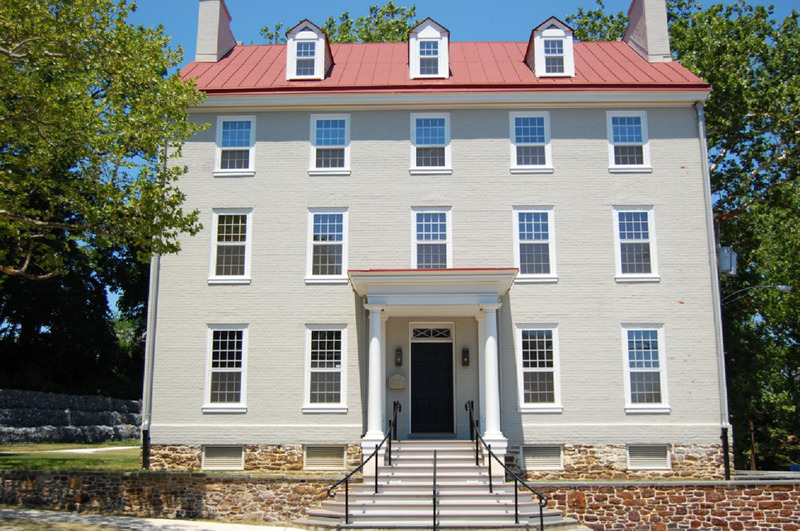
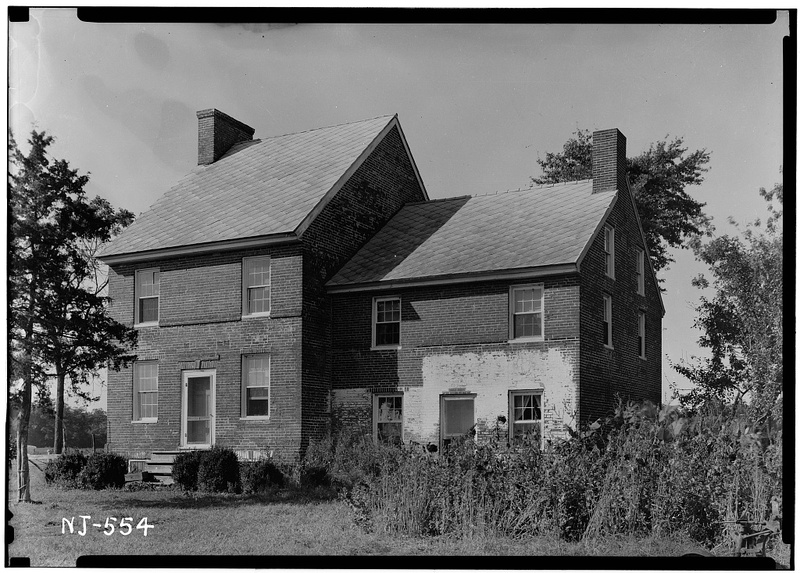
David Sheppard was a prosperous farmer who owned land in Fairfield Township, Cumberland County, and a town mansion in Bridgeton. The town mansion, built for him in 1791, still stands in Bridgeton. It is now owned by the city and is part of the Bridgeton Historic District. There is also another house associated with him: a red brick house built by his father, Joseph Sheppard, in 1781 in rural Fairfield Township. David inherited that house as part of the farm property that his father passed on to him in 1782. Both houses are generally referred to as "David Sheppard House."
Cumberland County records confirm that David Sheppard held several people in slavery in the early 19th century.
David Sheppard House is a historic mansion located at 31 W Commerce Street in Bridgeton, New Jersey. It was built in 1791 by David Sheppard, a prosperous farmer who owned land in Fairfield Township. The house is now the property of the City of Bridgeton and has undergone historic preservation work. Note that David Sheppard owned another house that was part of his farm property in Fairfield Township; that red brick house also still stands and is listed in the Historic American Buildings Survey under the name "David Sheppard House, Sea Breeze, Cumberland County, NJ."
Cumberland County Clerk's records confirm that David Sheppard held multiple people in slavery in his household in the early 19th century. It is uncertain whether these people served David Sheppard at his house in Bridgeton, in Fairfield, or both.
David Sheppard House is a red brick house located on Seabreeze Road in Fairfield Township, Cumberland County, New Jersey. This historic house was originally built by Joseph Sheppard in 1781 and was inherited by Joseph's son, David, a year later when Joseph died. David Sheppard owned the house and the surrounding property for the next 45 years until his death. Note that David Sheppard, who was a prosperous farmer, also had a town mansion that he built in Bridgeton in 1791. The house in Bridgeton is also known as David Sheppard House and is now owned by the city.
Cumberland County Clerk's records confirm that David Sheppard held multiple people in slavery in his household in the early 19th century. It is uncertain whether these people served David Sheppard at his house in Bridgeton, in Fairfield, or both.
David Silver was a resident of Middlesex County, New Jersey. He served as the Overseer of the Poor of East Windsor in the early 19th century. In this official capacity, he issued manumission certificates for residents of East Windsor whose enslavers agreed to set them free.
David Slaback was a resident of Middlesex County, New Jersey. He served as the Justice of the Peace for the county in the early 19th century. In this official capacity, he issued manumission certificates for residents of West Windsor and South Brunswick whose enslavers agreed to set them free.
David Smith was a resident of Middlesex County, New Jersey. He served as the Overseer of the Poor of South Amboy in the early 19th century. In this official capacity, he issued manumission certificates for residents of South Amboy whose enslavers agreed to set them free.
David Solomons was a Black man who lived in New Jersey in the early 19th century. His date of birth is uncertain. It appears he lived as a free man. In March 1805, he helped an enslaved young man named Charles Johnson run away from enslaver Mahlon Ford, who lived in Morristown, Morris County.
David Turvey was a resident of Middlesex County, New Jersey. He served as the Justice of the Peace for the county in the early 19th century. In this official capacity, he issued manumission certificates for residents of Woodbridge whose enslavers agreed to set them free.
David Vanderhoef was a resident of Middlesex County, New Jersey. He served as the Justice of the Peace for the county in the early 19th century. In this official capacity, he issued manumission certificates for residents of South Brunswick whose enslavers agreed to set them free.
David Williamson was an innkeeper who came to New Jersey from Scotland around 1730. He established a tavern at Road Hall (aka Rhode Hall) in South Brunswick Township, Middlesex County, and was one of the founding settlers of that neighborhood (which now lies at the border of South Brunswick and Monroe Township). He was a member of the Dutch Reformed Church of Cranbury.
David Williamson was an enslaver. One of the people he enslaved was a Black woman named Lydia. Williamson died in 1797 and appointed his four sons-in-law as executors of his will. In 1799, his four executors (Thomas McDowell, John Perrine, Stephen Johnes, and James Schureman) sold Lydia to Professor John Mclean Sr of Princeton University (then called the College of New Jersey).
David Wrighter was the first constable and jailer of Trenton, elected by the Common Council on December 28, 1792. He was in charge of the Trenton jail, which previously had been for many years managed by the Sheriff of Hunterdon County.
Somerset County birth records of enslaved children contain a birth certificate for Dean, daughter of Maria, born on 26 Jun 1805, enslaved by John P. Dumont in Hillsborough.
Debbie was born in 1808, the child of Lydia (enslaved by Joseph Buckalew of South Amboy, NJ). Under the provisions of New Jersey's Gradual Abolition Act of 1804, she was considered a slave for a term of 21 years and would become eligible for emancipation upon reaching that age.
Sussex County Births of Enslaved Children microfilm contains a birth record for Deborah. Her mother's name was not recorded. Her enslaver was Samuel D. Westfall of Montague.
Deerfield Township is a municipality in Cumberland County. It was established in 1748 as one of the original six precincts in Cumberland County and was incorporated as a township in 1798. Deerfield was originally larger than it is today. A portion of Deerfield was taken to form Bridgeton in 1845. In 1922, Deerfield split in half, and the western half became a separate township called Upper Deerfield. Due to these shifting boundaries, historical documents that mention slavery in Deerfield may be referring to events that took place in present-day Bridgeton or Upper Deerfield.
The New Jersey Society for Promoting the Abolition of Slavery enumerated black people (free and enslaved) who lived in Springfield and New Hanover townships, Burlington County, around 1797. This person’s name appeared on the list. The report did not specify whether this person lived in Springfield or in New Hanover. See the related Registration event for more information about the report.
She was listed as "Delilah" without a last name indicated, and was deemed "industrious" and "sober."
Delran is a borough near the Delaware River and Rancocas Creek in the northwestern section of Burlington County, New Jersey. Delran was incorporated as a separate municipality in 1880.
During the era of slavery, the area of modern-day Delran was officially part of the territory of Chester Township; it became Cinnaminson in 1860 and then broke off as Delran in 1880.
Researchers of slavery in Delran may also want to review records filed under Chester Township, since that was the main administrative entity for this area during the slavery era. The historical Chester Township existed in Burlington County from 1688 to 1945 and originally included the area of Moorestown, Cinnaminson, and the surrounding communities between Pennsauken Creek and Rancocas Creek.
Democrat was born in 1812, the child of Hanna (enslaved by Jacob Van Dike of West Windsor, NJ). Under the provisions of New Jersey's Gradual Abolition Act of 1804, he was considered a slave for a term of 25 years and would become eligible for emancipation upon reaching that age.
Deon was a Black woman who lived in Franklin, Somerset County, New Jersey, in the early 19th century. She was enslaved by Peter Wortman Jr. A birth certificate for her child has been found among Somerset County records.