Database Scope
What Can You Find Here?

1782 Receipt related to Harry, a Black man captured during the Revolutionary War
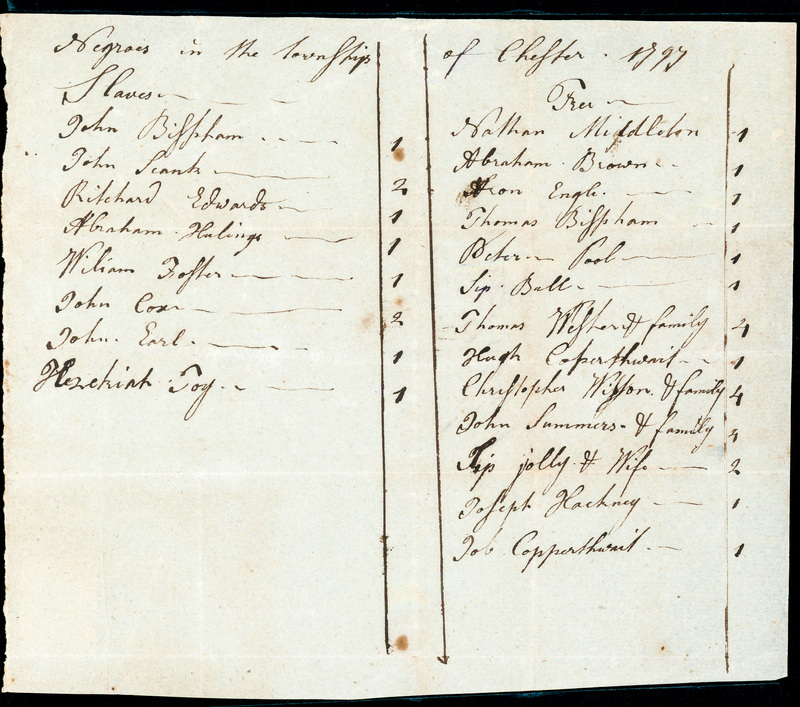
1798 Report enumerating enslaved and free Black people in Chester, by the New Jersey Society for Promoting the Abolition of Slavery

1800 Sale ad by Jacob R. Hardenbergh in Somerville

1805 Certificate of Abandonment for Dinah by George Farmer in Piscataway
The Event Types vocabulary page explains the terms used in the database and showcases the wide variety of life experiences that are documented here. You can also consult specific research guides for counties, universities, and records related to the interstate slave trade.
You can browse the database in multiple ways:
- EVENTS — this is the main gateway to search and filter event data by various criteria, including date, type of event, location, participant name, sex, and age, as well as the name of the enslaver involved
- PERSONS by name, sex, and group
- ORGANIZATIONS
- PLACES by type and county
- SOURCES by document type
Currently, the database includes nearly 3,000 names with related events drawn from these sources:
- Records related to Rutgers University officers and alumni, documenting their ties to slavery, such as accounting records, bills of sale, letters, and newspaper clippings
- Permission slips and organizational meeting minutes from the African Association of New Brunswick (1817–1824)
- Middlesex County Clerk's records:
- Middlesex manumission certificates (complete set)
- Middlesex birth certificates of enslaved children (approximately half of the records have been published and half are currently undergoing review to prepare for publication)
- Middlesex removal certificates (complete set)
- Sussex County birth certificates (complete set, including coverage of the area that is now Warren County)
- Burlington County records:
- Burlington manumission records from Deed Book A (held at the New Jersey State Archives)
- Reports enumerating enslaved and free Black people in various communities in Burlington County, conducted by the New Jersey Society for Promoting the Abolition of Slavery (filed under Registration event type)
- Original manumission and sale documents from the Burlington County Historical Society
- Cumberland County manuscript records, including original sale, indenture, and manumission documents from the Cumberland County Historical Society
- Gloucester County birth and manumission records, indexed from transcripts published by the Works Progress Administration in 1940 (includes coverage of the area that is now Camden County and Atlantic County)
- Abandonment Certificates for Piscataway Township, Middlesex County (complete set)
- Newspaper clippings related to the interstate slave trade and kidnapping of Black New Jerseyans in the early 19th century
- Runaway slave ads and slave sale ads from a range of New Jersey newspapers
- Sources submitted by our partners at the Princeton & Slavery Project that document slavery in the Princeton area (including newspaper advertisements and bills of sale that involve Princeton University officers and trustees)
- Examples of wills and will abstracts that mention enslaved Black people
- Various letters, receipts, and other manuscripts from Special Collections and University Archives, Rutgers University Libraries.
- Sources that originate in Rutgers Special Collections and University Archives can be easily identified and filtered by collection on the Sources browsing page. Simply use the filter "Rutgers Collection" and select the desired collection from the drop-down box.
Additionally, we have scanned all slavery records held at the Somerset County Clerk's Office. The names from these records are gradually being added to the database. While we work to index these records, you can already browse the archival images on our website.
We are working to index additional county records, manuscripts, and newspaper clippings. New record sets are published two to three times a year.